Home / Loose Sweets / Sweetzone Watermelon Belts Tub 1.1kg
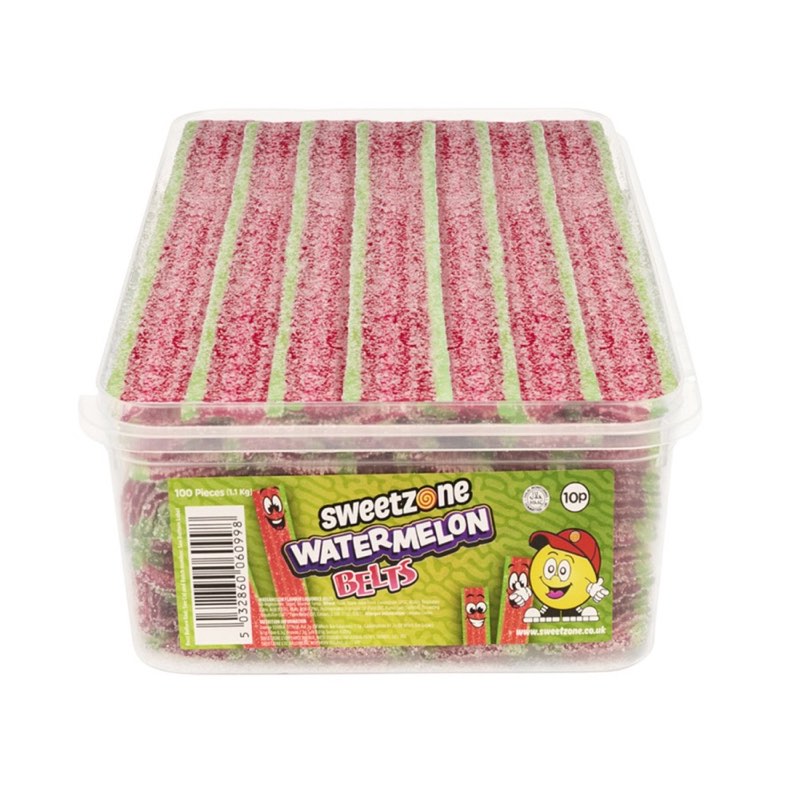
Sweetzone · 1200g
Read the full guide
Sweetzone Watermelon Belts Tub 1.1kg
£11.99
Currently out of stock
Fresh stock
Free over £20
Same-day dispatch
Secure checkout
There is a specific reason someone reaches for a tub of watermelon belts rather than a bag of something, and it is almost never "I fancied a sweet". A tub this size is a decision about a situation. Five kinds of shopper buy it, and knowing which one you are will tell you fairly quickly whether this is the right £11.99.
The event feeder. Somebody has to fill the table at a birthday, a christening, a leavers' do, a club night or a village hall event, and that somebody has worked out that buying nine small bags is both dearer and more annoying than buying one large tub. Belts are a particularly good event sweet because they are self-portioning: one belt is obviously one serving, so nobody stands over the bowl calculating. At 1,200g you are covering a room rather than a family.
The full guide to Sweetzone Watermelon Belts Tub 1.1kg
5,214 words on how it eats, who it suits, how to serve it and what to put beside it.
The people who buy belts by the kilo
The sweet cart and jar filler. Belts are one of the few formats that genuinely look better in a jar than in a bowl, because a strip has length and a jar has height. Fill a tall jar with belts standing up and you get vertical lines, which is an effect no moulded sweet can produce. Anyone running a sweet cart, a shop display or a permanently-stocked kitchen counter buys long-format sweets for exactly this reason, and buys them in quantity so the jar can be topped up rather than rationed.
The parent of a belt loyalist. There is a type of child — and a type of adult — who will walk past every gummy, every chocolate and every chew in the shop to get to the belts. It is a surprisingly firm preference and it does not shift much with age. If there is one of those in your house you already know it, and buying a kilo-plus tub rather than a series of small bags is simply the cheaper way to keep the peace.
The fruit-flavour shopper. Some people navigate the sweet shop by flavour rather than by format, and watermelon is one of the flavours that has its own following. It sits slightly apart from the usual strawberry-orange-lemon core of fruit confectionery: cooler, more floral, less obviously acidic. People who like it tend to seek it out specifically, and our watermelon shelf runs to only eight lines, so the options are finite and worth knowing.
The mix builder who needs length. This one is more technical and gets a full section below. In short: a pick-and-mix bag made entirely of small round things is monotonous to eat and dull to look at, and a long flat sweet is the standard fix. Anyone who builds mixes regularly keeps a belt in the rotation for structural reasons as much as for taste.
Who it is not for: anyone buying for very small children as a first sweet, since a long strip needs supervision and sensible handling — small hard sweets and whole gummies are a choking risk for young children, and they should be sitting down and watched while eating. Sweets are a treat, and anyone with an allergy in the household should check the manufacturer's packaging on the tub when it arrives before eating anything from it.
One thing to flag before you plan around this tub: it is currently out of stock. That is worth knowing at the top rather than three screens down. The alternatives section near the end sets out what to buy instead depending on whether you came for the flavour, the format or the quantity.
What you are buying
The Sweetzone Watermelon Belts tub holds 1,200g and costs £11.99. It comes in a single size — there is no small option and no larger one — so the only quantity decision is how many tubs. The flavour is watermelon and the colour recorded for the line is pink.
The format is the belt: a long, flat, flexible strip rather than a moulded shape. That distinction runs through everything else on this page, because a belt does not behave like a gummy in the hand, in the mouth, in a bag, in a jar or on a table. It is closer in spirit to a ribbon than to a sweet, and the things you can do with a ribbon — thread it, tear it, roll it, drape it, hang it over the edge of a glass — are all things people end up doing with belts without being told to.
The tub is the correct container for the format, and that is not an obvious point. Belts in a bag are a nuisance: they lie down flat, compress under their own weight, and the bag becomes a solid slab you have to peel apart. In a tub they sit loosely, keep air between them, and can be lifted out one at a time without dragging six others along. A tub also stands up, which matters if you are scooping from it repeatedly to fill bags.
Pink is a genuinely useful colour to have in the cupboard. Most sweet tables skew warm-orange and brown by accident, and a clear pink is one of the two or three tones that reliably lifts an arrangement. It also photographs well, which matters more than it used to if the table is going to end up on somebody's phone.
How a belt eats
Pick one up and the first thing you register is flexibility. It bends over the fingers, hangs, and has a slight weight to it at the far end. That is a completely different first impression from a gummy, which is inert in the hand, and it is the beginning of why belts get played with before they get eaten.
There are three normal ways to eat one and they produce three different experiences.
Fed in end to end is the slow way. The strip goes in a little at a time, and the flavour arrives as a long steady signal rather than a peak. This is the method that makes one belt last, and it is the method most people default to when they are doing something else at the same time — watching a film, sitting in a car, standing at a table talking.
Torn into pieces is the sociable way. A belt tears cleanly along its width with very little effort, which means it divides without scissors and without mess. Two children can share one belt without an argument about who got more, because the tear is visible and the halves are obviously halves. This is a genuinely underrated property at a party.
Folded and bitten whole is the greedy way, and the flavour hit is noticeably stronger because you have put several thicknesses in the mouth at once. The chew is denser too — a folded belt gives real resistance, whereas a single thickness barely fights back at all.
The texture across all three is soft-and-springy rather than tough. There is stretch in it: pull a belt gently and it gives a little before it parts, which is the property that makes tearing feel satisfying rather than fiddly. The chew is short — a single thickness is gone quickly — and it does not leave much behind on the palate.
The watermelon arrives fast and clean. Because a strip is thin, there is a lot of surface relative to the amount of sweet, so the flavour registers almost immediately rather than building. It reads as cool and rounded, slightly floral, with less of the sharp citrus edge that runs through most fruit confectionery. It fades quickly and cleanly too, which makes belts unusually good neighbours in a mixed bowl — they do not colour whatever you eat next.
Why the shape is the texture
Texture in sweets is usually discussed as if it were a property of the material — soft, hard, chewy, brittle. For belts that is only half the story, and the less interesting half. The dominant variable in how a belt eats is geometry: how thin it is, how wide, how long, and what that ratio does to everything from flavour delivery to how fast you get through the tub. This is worth understanding properly, because once you see it you can predict how any long-format sweet will behave before you try it.
Surface area is flavour speed. A thin flat strip has an enormous amount of surface relative to its volume. A moulded gummy of the same weight has a fraction of it. Surface is where the sweet meets the tongue, so a belt delivers its flavour almost instantly while a gummy has to be broken down before it gives much up. This is why belts taste "stronger" than moulded sweets of the same flavour even when nothing about the flavour differs — you are simply getting more of it at once. It is also why belts are the format of choice whenever a sweet is meant to hit hard and fast.
Thinness is why the chew is short. There is very little material between your teeth in a single thickness, so there is very little to chew. That sounds like a drawback and mostly is not, because the eater controls it: fold the belt and you have doubled or quadrupled the thickness and turned a short chew into a long one. Very few sweets let the person eating them choose the duration. A belt does, every single time, and that is the most distinctive thing about the format.
Length is pace. A long sweet imposes a rhythm. You cannot take a belt in one go without deciding to, so the default behaviour is slow, which means a bowl of belts empties more slowly than a bowl of small sweets even though each individual belt is quick to chew. If you are feeding a room for two hours, that property is worth money.
Flatness is why they tear and do not crumble. A flat strip has a consistent cross-section all the way along, so when you pull it, it parts cleanly across rather than fragmenting. Compare that with a moulded shape, which has thick and thin sections and breaks unpredictably. The clean tear is what makes belts shareable, and shareability is a real advantage in a bowl full of children.
Flexibility is why they are handled. Rigid sweets get eaten. Flexible sweets get played with first — wound round a finger, hung over the edge of a glass, threaded through something, used as a lace on a decorated biscuit. That is not a trivial observation. Sweets that invite handling are the ones that end up in party activities, on cakes and in photographs, and belts are near the top of that list.
Temperature moves all of it. A belt from a cold room is firmer, less stretchy and tears less cleanly. The same belt after an hour at room temperature is softer, more flexible and far more pleasant to eat. This is the easiest fix in the shop and almost nobody applies it: if the belts feel stiff, they are cold, not stale. Conversely, a tub left somewhere genuinely warm will produce belts that are too soft to tear cleanly and inclined to stick to each other.
How this compares with the other long formats we sell. A pencil is a belt rolled into a tube, and the tube changes it completely — more material per bite, a denser chew, no tearing. The Sweetzone Rainbow Pencils tub at £7.99 for 805g is the clearest comparison available, and the two eat quite differently despite being close relatives. Add a fizzy surface to the same shape and it changes again — the 1,100g fizzy rainbow pencils at £11.49 put a prickle on the outside that a plain belt does not have, which shifts the whole experience toward the sharp end. Tubes are a third variation: Candy Realms Tutti Frutti Tubes at £7.99 for 780g are hollow, which means they crush rather than stretch and give a completely different mouthfeel again.
Against those, the belt's distinguishing property remains that the eater sets the thickness. It is the most adjustable format on the shelf, and that is the answer to why people who like belts really like belts.
The money, worked out properly
This is a purchase where the arithmetic is genuinely pleasant, so it is worth doing in full rather than waving at it.
£11.99 for 1,200g is £1.00 per 100g. Almost exactly — 99.9p, to be precise. That is a round, memorable number and it makes every other calculation trivial, because a gram costs a penny for every ten of them.
- A 25g handful costs 25p. The tub contains 48 of them.
- A 15g party-bag portion costs 15p. The tub fills 80 bags.
- A 40g serving per guest costs 40p. The tub serves 30 people.
- A 100g gift bag costs exactly £1.00 in sweets. The tub makes 12.
- A 200g "help yourself" bowl costs £2.00 to fill, and the tub fills it six times across an evening.
Cost per guest is the number that should drive the decision. Forty pence a head is the figure to hold on to. If you are catering a party for thirty and the sweet element costs £11.99 in total, that is a rounding error against the rest of the budget, and it buys you a table that looks generous. Most people massively overestimate what filling a sweet table costs, buy too little as a result, and then wonder why it looked thin. One tub, thirty guests, forty pence each.
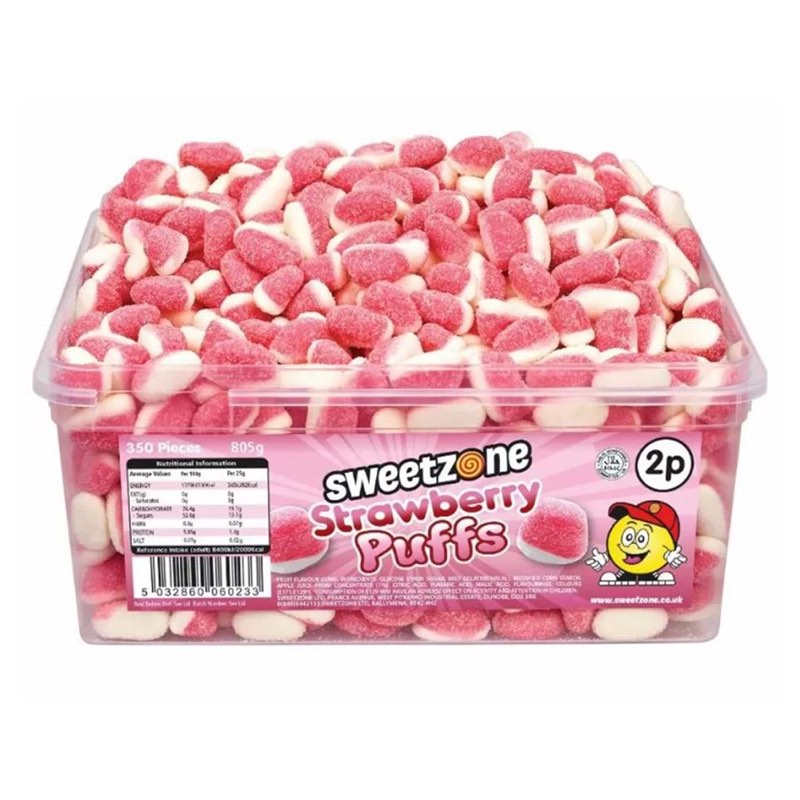
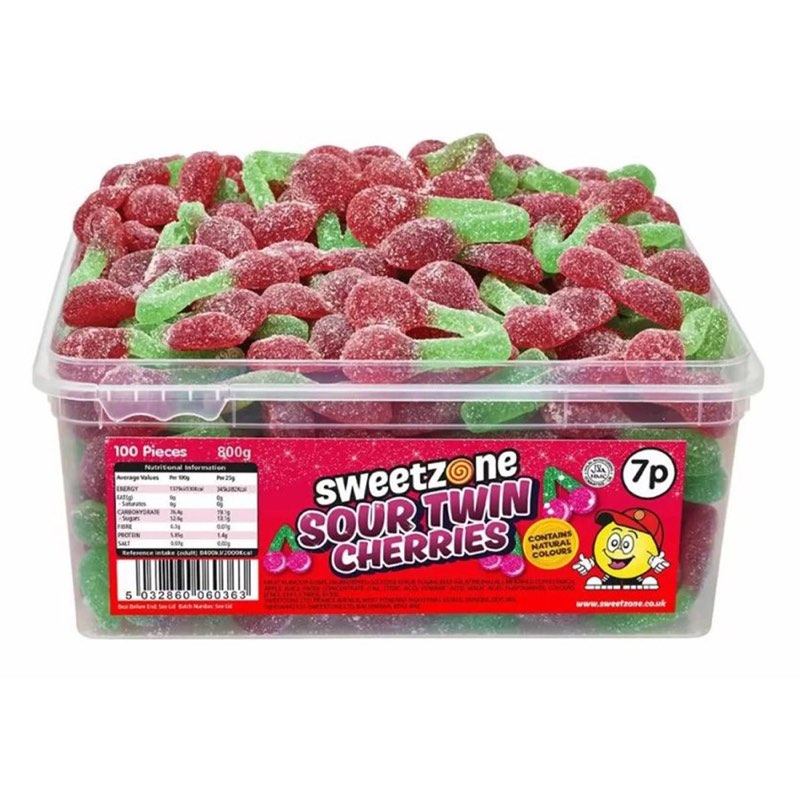
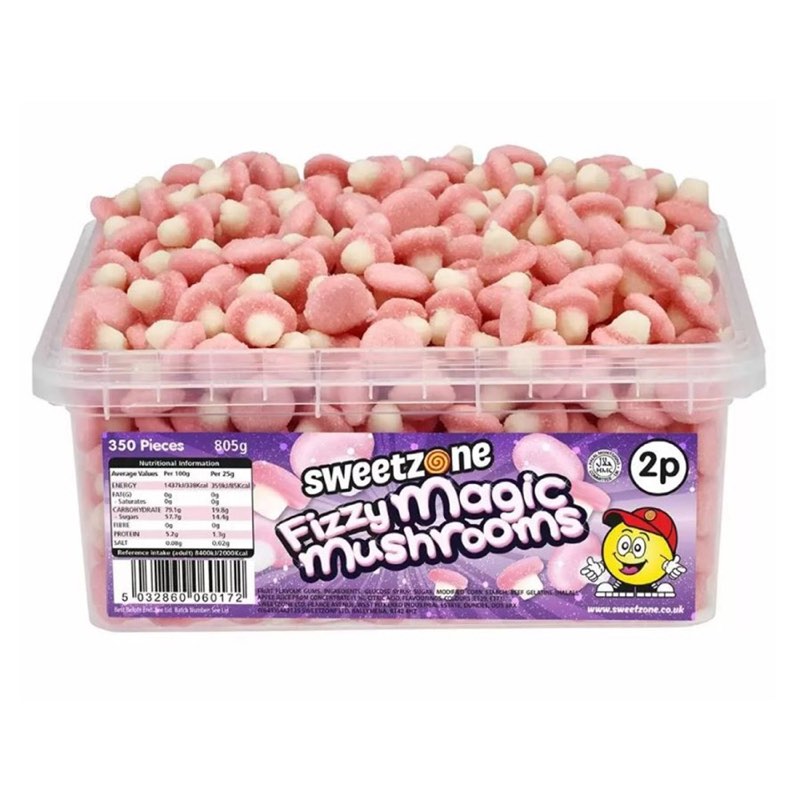
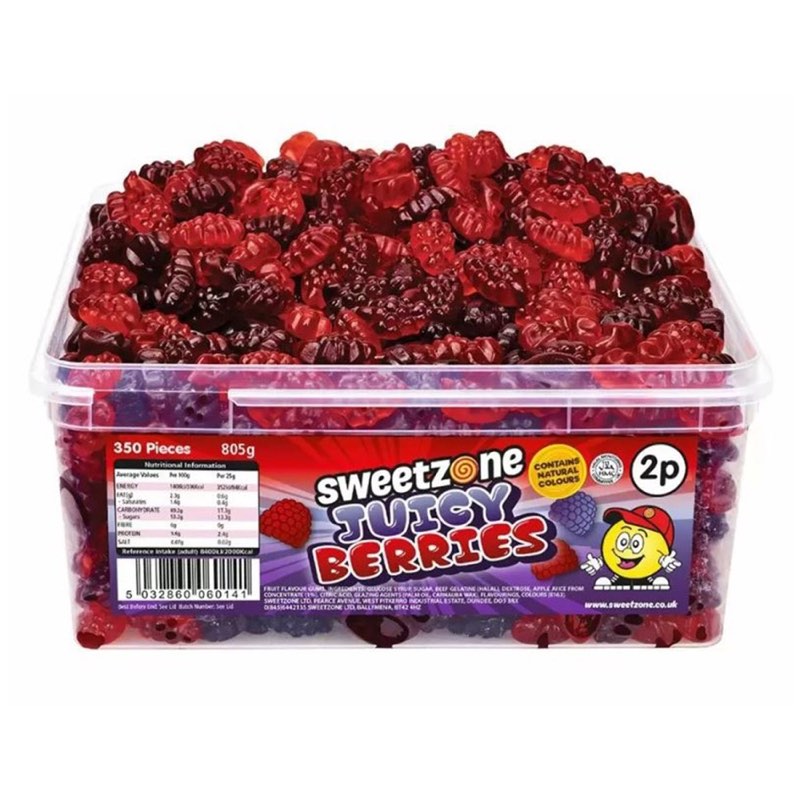
Against the brand's own shelf, this is the value option. The Strawberry Puffs tub at £7.99 for 805g works out at about 99p per 100g — effectively identical, which is a useful sanity check that the pricing across the range is consistent. The Juicy Berries tub at £8.99 for the same 805g comes in at about £1.12 per 100g, so it is the dearer rate of the two. The Sour Twin Cherries tub at £7.99 for 800g and the Magic Mushroom tub at £7.99 both sit at essentially the same penny-per-gram as this one, which means choosing between them is a question of flavour and format rather than of value. That is a good position for a shopper to be in: you can pick what you actually want without paying for the privilege.
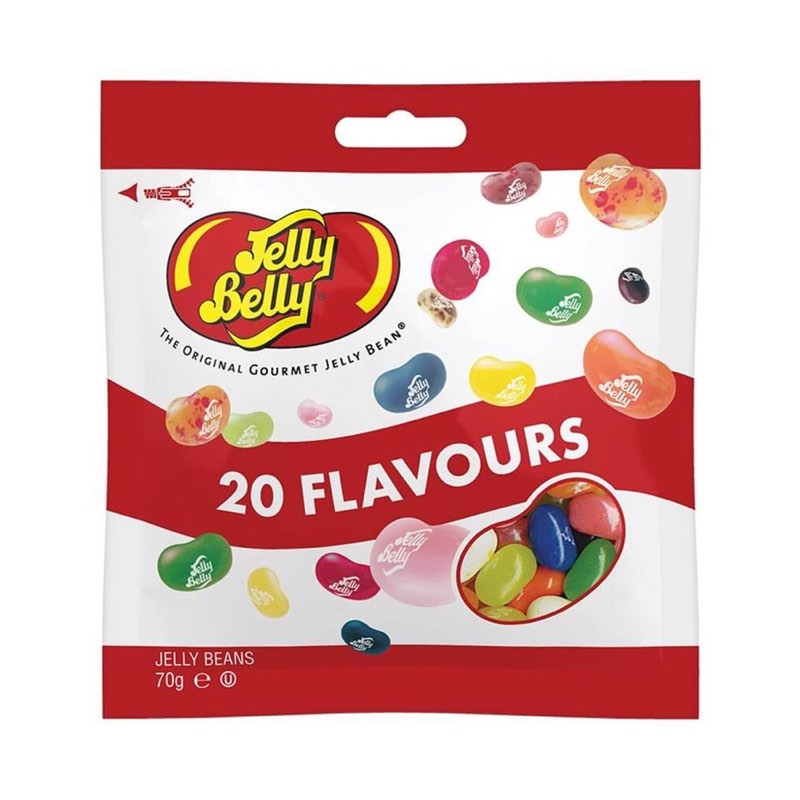
Against small bags, the gap is enormous. A Mike & Ike Sour Watermelon theatre box at £2.25 for 120g is about £1.88 per 100g — nearly twice the rate — and a 70g Jelly Belly assorted bag at £2.40 works out at roughly £3.43 per 100g, which is more than three times. That is not a criticism of either: small formats are priced for convenience, portability and gifting, and they do those jobs properly. But if your requirement is volume, buying it in 70g units is the most expensive possible way to get there. The rule of thumb is simple — small bags for pockets and stockings, tubs for tables.
Where the tub stops being the right answer. If you want two hundred grams of watermelon sweets, do not buy 1,200g of them. The remaining kilo will sit in a cupboard and you will have spent £11.99 to save £1.50 against a small bag. Kingsway Watermelon Bon Bons at £5.49 are the sensible middle route if you want the flavour in a smaller commitment and a completely different format. The tub earns its keep at scale, and only at scale.
Watermelon, and what sits well beside it
Watermelon occupies an unusual position in fruit confectionery. Most sweet fruit flavours are built on a sharp-sweet axis — the acid gives them definition. Watermelon does not work that way. It reads as cool, soft-edged and faintly floral, and its defining quality is refreshment rather than sharpness. That makes it easy to eat a lot of and slightly harder to pair.
The flavours that sit well beside it are the other cool ones: berry, melon, and anything green-tasting. The flavours that fight it are the deep, warm ones — caramel, toffee and cola all flatten it, because watermelon does not have the intensity to hold its own against them. Put a belt next to a salted caramel bon bon at £5.49 and you will taste the caramel through the next three sweets; keep them in separate bowls and both are better for it.
Sharp company works well, as long as it is properly sharp rather than moderately so. The contrast between a cool, rounded watermelon and something genuinely acidic is one of the more satisfying pairings on a sweet table — Barnett's Mega Sour Apple at £3.99 is the obvious partner, and a small amount of it goes a long way.
With only eight lines on the watermelon shelf, it is one of the shorter flavour categories on the site and easy to read end to end. The brand shelf is much larger — the Sweetzone pages hold twenty-four lines — and worth browsing if the format and the price point are what brought you here rather than the fruit.
Belts in a mix
A long flat sweet solves two problems in a pick-and-mix bag that nothing else solves as cleanly.
The visual problem. A bag of nothing but small round sweets looks like a bag of gravel. One long item running through it gives the eye something to follow and makes the whole bag look deliberately composed. This is why almost every well-built mix in any shop has a belt, a pencil or a lace in it somewhere.
The pacing problem. Small sweets are eaten in handfuls; long sweets are eaten one at a time. A bag containing both naturally alternates between fast and slow, which keeps it interesting for longer than a bag of uniform pace.
The proportion that works is one or two belts per bag, not a bundle. Belts occupy volume and will dominate the look of a bag very quickly; two is a feature, six is a bag of belts with some other sweets trapped underneath.
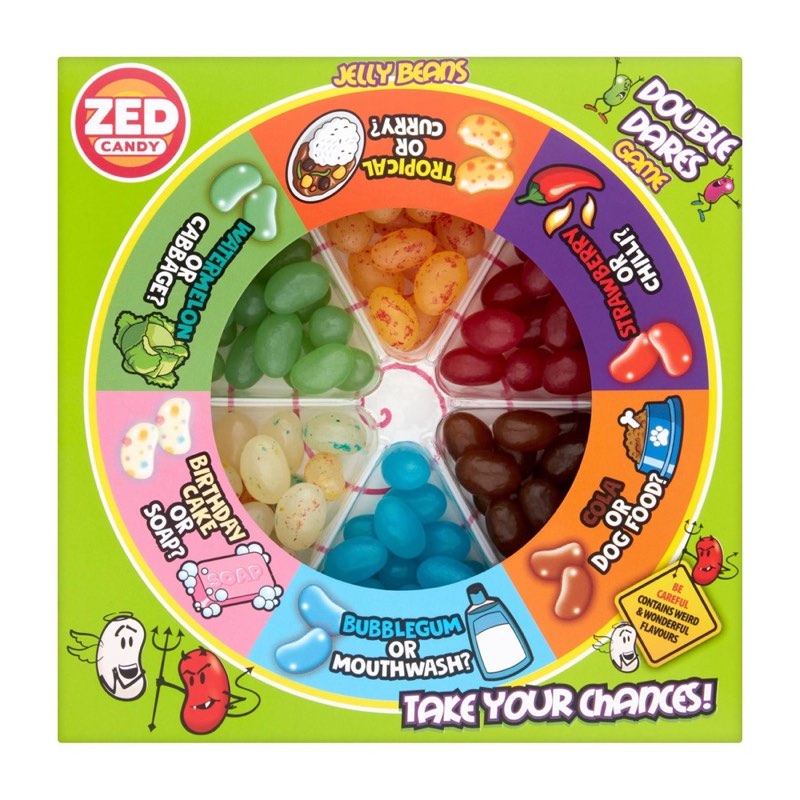
For the small-sweet element, something with variety built in does the most work — the Zed Candy Double Dares jelly beans game at £2.99 for 100g brings an element of chance into a bag, which turns a mix into an activity for a certain age group. For a wrapped element that can go in a pocket or a lunchbox without picking up everything else, Barratt Black Jack Chews at £5.49 are the standard answer. And for a completely different texture at the soft end, BUBS Banana & Caramel Foam Sweets at £7.50 collapse rather than chew, which is the maximum possible contrast with a belt — though keep them in separate compartments if the caramel note matters to you, for the reasons above.
If you would rather work from someone else's ratios, the pre-built mix selections have already balanced format and pace, and they are a reasonable model to copy before building your own.
Occasions this tub was made for
Children's parties. Self-portioning, tearable, shareable, and one tub covers thirty guests at 40g each. It is close to the ideal party sweet.
Sweet carts, weddings and christenings. Belts stand up in tall jars and create vertical lines that moulded sweets cannot. Pink is also one of the easiest colours to work into a scheme.
Summer events and garden parties. Watermelon reads as a warm-weather flavour, and belts do not melt, which is more than can be said for most of the alternatives on a hot afternoon.
Film nights. Long, slow, quiet to eat and not messy. Very few sweets tick all four.
Baking and decorating. A flexible strip is a ready-made lace, ribbon, handle or wheel-spoke on a decorated cake or biscuit, and it can be cut to length with scissors. This is a use the format is unusually good at.
Fundraisers and school fairs. Eighty 15g bags from one £11.99 tub is the kind of margin a fair is built on.
Care parcels and student boxes. Belts survive being posted and being stored badly, and a flat bag of them goes through a letterbox.
Things you can do with a belt that you cannot do with a gummy
Most sweets have exactly one use. A flexible strip has several, and the people who buy belts in quantity tend to be the ones who have worked that out. None of this is essential to enjoying them, but it is the reason a tub of belts gets used up while a tub of something else sits in the cupboard.
They tie. A belt will knot loosely, which means it can be used as a bow on a wrapped treat, a tie on a small bag, or the finishing touch on a decorated plate. It is edible ribbon, and at a party that is a small piece of theatre for no extra cost.
They measure. Because each belt is roughly the same length, they are an unusually easy sweet to portion fairly by eye. Two belts each, and the argument is over before it starts. Anyone who has tried to divide a mixed bowl between four children understands what that is worth on a Saturday afternoon.
They decorate. Cut to length with scissors, a belt becomes a stripe across a traybake, a lace across the top of a cake, a handle on a decorated biscuit basket, or the border round the edge of an iced sponge. Flat things sit flat on icing without sinking, which is more than can be said for a heavy moulded sweet. If you bake with children at all, having a tub of long flexible sweets in the cupboard is more useful than the same money spent on something that can only be eaten.
They make games. The race to eat one end to end without hands is a party standard and needs no equipment. So does the two-ends-of-the-same-belt game, which most people have played at some point without knowing it had a name. A long sweet is an activity in a way a round one never is.
They hang. Over the rim of a glass, off the edge of a dessert, looped over a cake stand. If a table needs height and movement rather than another flat plate of things, a belt is the cheapest way to get it.
Keeping belts in good condition
Belts have two specific storage vulnerabilities and both follow from the geometry described above.
They stick to each other when warm. Large surface area plus pressure plus heat equals a block. The fix is temperature: keep the tub in a cool cupboard away from the oven, the kettle and direct sun. If belts have already stuck, letting the tub cool down for an hour before opening usually lets them separate cleanly rather than tearing.
They dry out fast when open. Thin sweets lose condition faster than thick ones for the same reason they deliver flavour faster — there is more surface exposed. A tub left with the lid resting on top will give you noticeably stiffer, less stretchy belts within days. Seat the lid properly every time. This is the whole practical argument for the tub format.
Two further habits are worth adopting. If you are filling a display jar, fill it with a working amount and top up from the sealed tub rather than emptying everything into the jar on day one — belts that have stood in an open jar for a fortnight are not what you bought. And if you are making gift bags, make them close to when you will hand them over, for the same reason.
If belts do stiffen slightly they are not spoiled; they are simply drier and less flexible. They still eat perfectly well, and they are ideal for cutting up into a mix or using as cake decoration where the stretch does not matter. Always go by the date printed on the manufacturer's packaging.
One size — and what to buy while it is out of stock
This line is sold in a single size at a single price: 1,200g for £11.99. Scaling is linear, so two tubs is 2.4kg for £23.98, which is the right purchase for a hall-sized event and overkill for anything smaller.
Since the line is unavailable at the moment, here is the honest substitution guide:
- If you came for the format, go to the pencils. The plain rainbow pencils at £7.99 are the cheaper entry, and the fizzy 1,100g version at £11.49 is the closest match on size and price while adding a prickle the belts do not have.
- If you came for the flavour, the watermelon bon bons are the nearest thing on the site in a completely different format, and the sour watermelon theatre box is the small, portable version.
- If you came for the quantity at the price, stay on the brand shelf. The strawberry puffs and the sour twin cherries are both £7.99 tubs at essentially the same rate per gram, so you lose nothing on value by switching flavour.
- If you came for something long to put in a mix, Briquette at £5.49 is another distinctive loose line worth a look for anyone shopping by format, and the tutti frutti tubes give you a third long-format option with a hollow structure.
Where to go next on the site
This product sits on three shelves. The loose sweets category is the largest at 356 lines and is where to shop when weight is the thing you care about. The Sweetzone brand pages are the route if the tub format and the price point are what you liked. And the watermelon flavour shelf is the short, specific list for anyone who navigates by fruit.
Beyond those, the whole shop is there for browsing with no particular destination, and the candy and chocolate hub is the place to go if the table needs a chocolate element alongside the sweets. Two neighbouring brand shelves are worth knowing: the Kingsway pages, which cover a great deal of the same loose-sweet ground in different formats and include the watermelon bon bons mentioned above, and the Haribo range, which is the deepest tub selection on the site and the obvious place to look if what you want is another kilo-scale container. If it is a ready-assembled selection you are after, start from the loose shelf listings and work by weight instead.
Questions shoppers ask about this tub
How many belts are in the tub?
We do not hold a verified piece count for this line, so we would rather not put a number on it. The weight recorded is 1,200g, and working in grams is more reliable anyway because belt sizes vary. Decide the portion you want, weigh one out, and divide 1,200 by that figure. The common cases — 15g, 25g, 40g and 100g — are all worked out in the value section above.
Why is it showing as out of stock?
Because it is, at present. Stock on individual lines moves and we would rather say so plainly than let the page imply otherwise. The substitution list above covers the three most common reasons people arrive at this page and what to buy instead in each case.
Are belts good for young children?
They are popular with children and they tear easily, which helps with sharing. The standard caution applies to any sweet of this kind: young children should be supervised and seated while eating, and whole gummies and small hard sweets are a choking risk for the very young. Tearing a belt into shorter lengths before handing it over is sensible for smaller children. If anyone at the table has an allergy, check the manufacturer's packaging before serving.
Will they be too sour?
Watermelon is one of the rounder, cooler fruit flavours rather than one of the sharp ones, and nothing about this line is recorded as a sour or fizzy type. If you specifically want sharpness on the table, add it deliberately as a separate item rather than expecting it from these — a small quantity of a dedicated sour product alongside gives you the contrast without changing what the belts are.
Can I cut them up?
Yes, and it is a good idea for several uses. Scissors give you clean, even lengths for cake decoration, for topping a dessert, or for making portions uniform across party bags. They also tear by hand perfectly well if you do not mind slightly uneven pieces, which is generally fine for eating and less good for decorating.
Do they stick together?
They can, if the tub has been somewhere warm. It is normal for the format rather than a fault, and it is almost entirely preventable by keeping the tub in a cool cupboard rather than near the oven or in sunlight. If they have compacted, cooling the tub for an hour before opening makes them come apart cleanly instead of tearing.
Is a tub better value than a bag?
For quantity, substantially. At £1.00 per 100g this tub is roughly half the rate of a 120g theatre box and around a third of the rate of a 70g bag of jelly beans. Small formats are priced for convenience and portability, which are real benefits — but if the job is filling a table or a jar, the tub is the efficient purchase by a wide margin.
How many people will one tub feed?
About thirty, at 40g a head, which is a generous individual serving when there are other things on the table too. If sweets are the only thing being served, plan on 60g to 80g a head and one tub will cover fifteen to twenty. For party bags rather than a table, one tub fills eighty bags at 15g each.
Are these vegetarian or vegan?
Our supplier has not provided dietary tags for this line, so we will not state anything in either direction. If you are shopping to a dietary requirement, the manufacturer's packaging on the tub is the definitive source and reflects the exact batch you receive — check it on arrival before eating.
What is the difference between a belt and a pencil?
Geometry, and it changes everything. A belt is a flat strip: thin, high in surface area, quick to give up its flavour, short to chew unless you fold it, and easy to tear. A pencil is essentially the same idea rolled into a tube, which means more material per bite, a denser and longer chew, and no clean tearing. If you like adjusting how long a sweet lasts, belts give you that control and pencils do not.
Will they survive being posted?
Well, generally. They do not melt, they are not brittle, and a flat bag of them will go through a letterbox, which removes the delivery problem entirely. Seal them properly — drying out is the main risk in transit rather than damage — and keep the parcel out of a hot car or a sunny doorstep for any length of time.
What goes on the table alongside them?
Something small and varied to contrast with the length, something genuinely sharp in small quantity to contrast with the coolness of the flavour, and, if there is room, something soft that collapses rather than chews. Three textures and two flavour directions is enough for any table; more than that and nothing gets tasted properly.
The short of it
1,200g of pink watermelon belts for £11.99 — exactly a pound per 100g, thirty guests at 40p a head, or eighty party bags at 15p each. The format is the point: a flat strip gives its flavour up immediately, lets the eater decide how long the chew lasts by folding it, tears cleanly for sharing, and stands up in a jar in a way no moulded sweet can. It is out of stock at the moment, so the alternatives above will get you to the nearest thing today — but when it is back, this is one of the more useful tubs on the site to have in the cupboard before an event.
More from Sweetzone
More watermelon sweets
More loose sweets sweets


Where this sits
Sweetzone Watermelon Belts Tub 1.1kg appears on these shelves. Browse them, or jump to something nearby.
You might also like