3D · 340g
Read the full guide
Taffy Town Stars And Stripes Gift Box 340g
£9.49
✔ In stock — ready to ship
Fresh stock
Free over £20
Same-day dispatch
Secure checkout
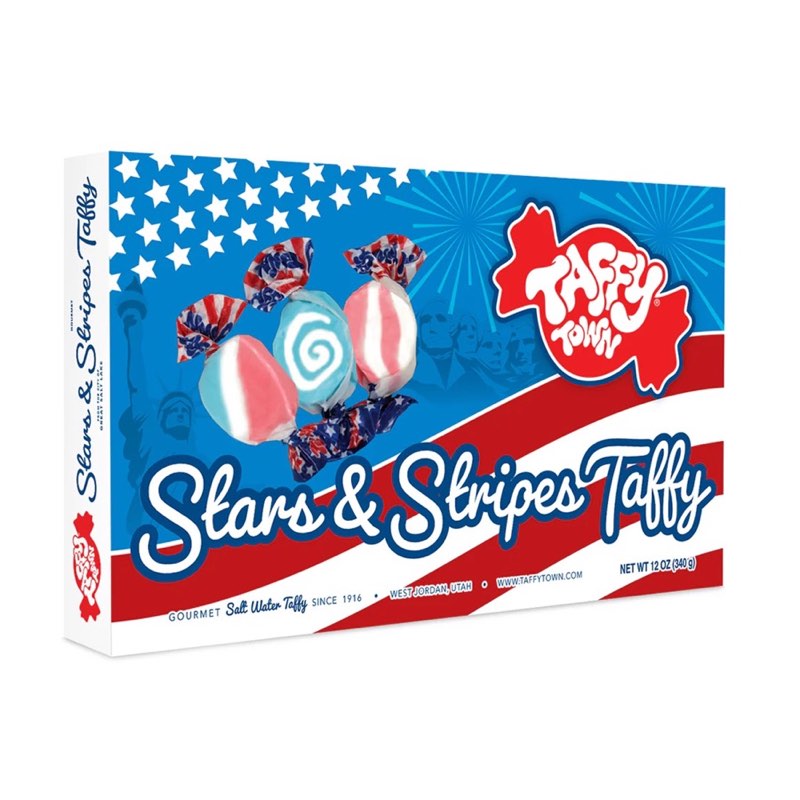
Some sweets are bought to be eaten and some are bought to be seen first and eaten second. The Taffy Town Stars And Stripes Gift Box 340g, at £9.49, is firmly in the second camp, and the reason is the one word our supplier gives us for its colour: multi coloured. A box of one-colour sweets is a snack. A box of mixed colours, with a red, white and blue theme on the lid, is a centrepiece, and that changes which occasions it belongs to.
Start with the themed table, because that is the obvious one. People throw parties with a look — a colour scheme for a birthday, a bunting-and-trestle-table arrangement for a summer gathering, a red-white-and-blue spread for a street party or a sports final. Themed tables are surprisingly hard to feed, because most party food is brown, beige or orange. A multi-coloured chew in a box that matches the bunting solves a problem that otherwise takes three trips round a supermarket.
The full guide to Taffy Town Stars And Stripes Gift Box 340g
5,761 words on how it eats, who it suits, how to serve it and what to put beside it.
The occasions that want a box of colour sitting on the table
Then the sports night. There is a specific kind of evening where a group of people sit down in front of a screen for two hours and want something to pick at that does not require a plate, does not go cold, and does not need anyone to get up at a tense moment. Chews are unusually good at this. They last, which means a small handful covers a long stretch, and they do not leave hands greasy in the way crisps do. A box with a flag theme going round a room during a match is doing exactly the job it was designed for.
The summer garden gathering is a third. Sweets outdoors have a hot-weather problem — chocolate is out from about May, and anything with a coating gets tacky. Chews handle warmth better than most formats, provided you keep the box in the shade, and a bright bowl on a garden table reads as summery in a way a bar never does.
School and club events are the fourth cluster, and they are the ones people underestimate. Summer fairs, sports days, end-of-season club presentations, fundraising stalls and the prize table at a raffle all need things that are colourful, shareable, obviously worth having, and under a tenner. A 340g box ticks four boxes at once, and we come back to the prize-table use properly further down.
Fifth, and quietest, is the long journey. Coach trips, motorway runs, a train with a delay on it. Chews are the traditional travel sweet for good reason: they take a long time to eat, they survive a bag, and a box passed down a row of seats keeps a group of people occupied for a quarter of an hour without anybody needing a table.
And sixth, the ordinary one — a Friday night in, a film, and a bowl. This box does not need an occasion. But the colour is why you would pick it over a plain bag when there is one going.
Multi-coloured, fruit and chewy: reading the three facts we do have
Our listing gives three descriptive facts about what is in this box, and each one tells you something practical.
Multi coloured. That is the fact doing the most work. A mixed-colour assortment behaves differently from a single-colour one on a table: people pick by eye, which means they take a specific colour rather than the nearest piece, which means the bowl empties evenly and slowly rather than from the top down. It also means the box photographs well, if you are the sort of person who sets a table and then takes a picture of it, and it means you can sort by colour — which sounds trivial until you have watched a seven-year-old do it for twenty minutes at a party.
Fruit. The flavour direction is fruit rather than dairy, cream, caramel, mint or chocolate. In practical terms, fruit flavours are bright and front-loaded: they hit early, they are easy to identify, and they clear the palate rather than coating it. That makes them the right choice for a long session and the right choice next to savoury food, and the wrong choice if you want something rich to finish a meal with. For the richer end of the same range, you would go to a caramel or a cream line instead.
Chewy. This is a texture commitment rather than a flavour one, and it is the fact that most changes how the box performs. See the next section.
That is the whole of what we know about the contents, and we are not going to extend it. We do not publish ingredient, nutrition or allergen detail for this line, so when the box arrives, read the manufacturer's own packaging before anybody eats anything — especially if you are putting it out for a group and you do not know everyone's situation. Sweets are a treat rather than food, and small hard sweets and whole chews are a choking risk for young children, so an adult should be there when little ones are eating them.
What a chew actually asks of you
Chewy is the most underrated word on a sweet listing, because it determines the pace of the whole experience.
A boiled sweet dissolves. You put it in, and time does the work; your only decision is whether to crunch it early. A gummy is springy and quick — three or four bites and it is gone. A chew is the slow one. It resists at first, gives under pressure, and then keeps giving. You are actively working on it for a while, and the flavour is released gradually over that whole period rather than arriving all at once.
The practical consequences are worth knowing before you buy 340g of them.
They go further than they look. Because each piece occupies your mouth for a minute or two rather than fifteen seconds, a given weight of chews covers far more time than the same weight of gummies. A bowl of chews at a party lasts noticeably longer than a bowl of anything else, which is why they are good value on a table even when they are not the cheapest per gram.
They stop conversation, briefly. This is a genuine social property and it is worth planning around. A room full of people working on chews is a quieter room for the first thirty seconds. It is excellent during a film and mildly awkward during a speech. Put chews out before the speeches, not during them.
They warm up in the hand. Chews soften as they are handled, which makes the first bite of a piece that has been sitting in a warm palm easier than one straight from the box. If you have kept the box somewhere cold, the first few pieces will be firmer going in.
They stick to teeth. No way round it; that is what chewy means. It is a reason to keep them away from anyone with recent dental work, and a reason to put a drink on the table next to the bowl.
If that description makes you want something faster, the springier formats are a whole different shelf — the jelly and gummy listing is where to go for sweets that are finished in three bites. If it makes you want more of this, our chewy section runs to 78 products, and it is one of the better-populated shelves on the site.
Giving it away: groups, prizes, parcels and the wrapping problem
A gift box is bought to be given, so it is worth being specific about the four gifting situations this particular size and price handle well — because they are not all the same job.
The gift that goes to a group rather than a person
Most gift advice assumes one recipient. A great deal of real gift-giving is aimed at a group: a staffroom, a ward, a team, a family you are visiting, a household of students. Group gifts have a different requirement — they must divide without anyone doing any work, and they must not run out embarrassingly in front of the people who arrived last.
Three hundred and forty grams of multi-coloured chews divides well because the pieces are individually sized and visually distinct, so people self-portion without being told to. Nobody has to cut anything, find a knife, or decide who gets the good bit. That sounds small. It is the entire difference between a gift that gets opened and a gift that sits on a shelf because opening it would be a whole thing.
Presentation without wrapping paper
The practical advantage of a box over a bag at gift time is that it is already the right shape. It has flat sides, square corners and a front. You can wrap it in one sheet with two folds, or you can not wrap it at all and tie a ribbon round it, and either way it looks deliberate. A bag of sweets wrapped in paper looks like a wrapped bag of sweets, which is to say it looks like a shape with a rustle inside it.
If you are adding a card, tape it to the top rather than putting it under the lid, where it will be found forty minutes later by somebody rummaging for the last piece. And if you are giving several gifts at once and want them to look like a set, a box gives you a stacking unit; three of them tied together with a single ribbon is a better-looking present than three bags in a carrier.
Raffles, tombolas and the prize table
This is the use that people forget and it is one of the best. Fundraising prize tables need items in the £5–£15 band that look worth winning from a distance, do not need a size, do not need explaining, and do not go off before the event. A bright 340g sweet box is close to ideal, and it appeals to the widest possible slice of a hall — children want it, adults will take it, and nobody is ever disappointed to win sweets.
If you are stocking a whole table rather than buying one prize, mix the price points so the table has a shape. Something around eight pounds fills space well: the Candy Realms Tutti Frutti Tubes Tub at £7.99 for 780g is physically large, which matters enormously on a prize table where size does half the persuading. Then fill the low end with small, cheerful things — a 140g bag of Maoam Pinballs at £1.99 and a ten-pack of Drumstick Chew Bars at £2.50 give you two more chewy prizes for under a fiver between them, and a ten-pack can be split into ten small prizes if you are running a children's stall.
Parcels to people who are away
Students, people working abroad, somebody in hospital for a fortnight. The rules for a parcel are: nothing that melts, nothing that needs a fridge, nothing that needs cutlery, and more variety than volume. A box as the anchor plus three or four small items is the standard shape, and chews are among the most parcel-proof sweets there are.
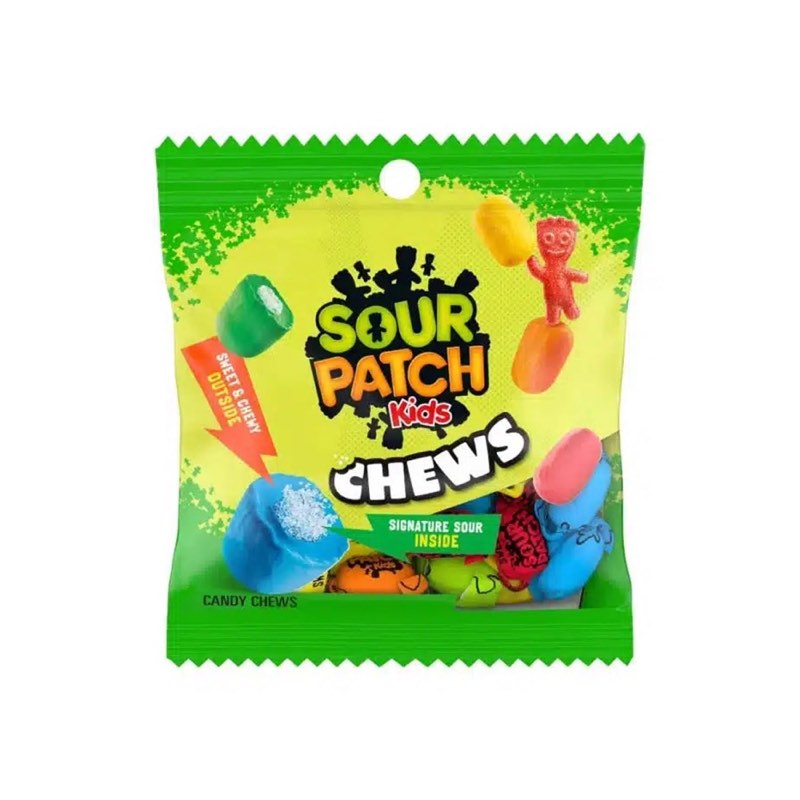
For variety at small cost, the Mike & Ike Mega Mix Sour Theatre Box, 120g for £2.25 adds a sour note and a cinema-sized carton that packs flat, and the 45g Jelly Belly Bean Boozled box at £2.99 is a small novelty item that gives the parcel a talking point without taking up space. Add a 60g bag of Sour Patch Kids Chews at £2.79 if you want a second chew in a different direction, and the parcel is done for about eighteen pounds.
End-of-term and thank-you gifts
The rule for a teacher gift, a thank-you to a neighbour, or anything given across a slightly formal relationship is that it should be shareable and unmistakably under a certain value. Sub-£10 and openly communal is the safe zone, and a box that visibly goes round a staffroom or a family hits it. It also avoids the problem of a gift being too personal from someone who does not know the recipient's tastes — nobody has to pretend to like a colour.
Chews, the penny tray and the seaside counter: where this box comes from
A multi-coloured fruit chew is not a new invention dressed up in a themed box. It is the current form of one of the oldest and most durable categories in British sweet retailing, and knowing the lineage tells you why the format works.
The ancestor is the penny tray. Every corner shop within walking distance of a school had one: a flat tray or a set of shallow compartments by the till, stocked with individually wrapped chews sold one at a time for coppers. It was the only part of the shop where a child with eight pence was a serious customer, and it was built around chews specifically because chews were the sweet that gave the best value per penny. They lasted. A boiled sweet was gone in a lesson; a chew saw you to the bus stop.
That tray shaped a whole generation's taste, and its DNA is still on our shelves. Drumstick chew bars in a ten-pack at £2.50 are the direct descendant — wrapped, single-portion, sold by the handful rather than the gram. Barratt Fruit Salad Chews at £5.49 are another survivor of the same counter, and their name is practically a museum label for the era. If that whole corner of the shop is what you are after, the retro shelf collects the lines that trace back to it.
The second ancestor is the assorted-chews jar on the weigh-out wall. Where the penny tray sold one flavour at a time, the jar sold the mix — a quarter of assorted fruit chews, scooped, weighed and twisted into a paper bag. The assortment was the product, and the pleasure of it was partly the lottery of what came out of the bag. Kingsway Assorted Fruit Chews at £5.49 are that jar in modern packaging, and the wider Kingsway shelf is where most of the weigh-out classics on this site live. A multi-coloured gift box is the same idea again: an assortment where the variety is the point.
The third strand is the seaside shop, and it is the one that explains the box rather than the sweets. Holiday sweet shops have always run two quite separate operations under one roof. At the back there is the loose wall — scoops, bags, pick-and-mix, priced by weight, aimed at the people actually on the trip. By the door there is the gift shelf: boxes, tins and cartons with pictures on the front, priced per item rather than per gram, aimed at people taking something home to those who did not come. Themed packaging exists because of that shelf. A picture on a box turns a sweet into a souvenir, and a souvenir is bought to be handed over.
That is the tradition this box belongs to, and it explains its pricing honestly. You are buying a gift-shelf item, not a weigh-out item. The flag theme is decoration and a conversation-starter — it is a print on a lid, not a claim about where anything comes from, and we do not hold origin information for this line so we make no such claim.
The last inheritance from the old counter is how shops organise themselves: by maker, because regulars buy by house style. We have kept that. The Haribo shelf is where most people go by reflex for gummy formats, the Sweetzone listing carries a lot of the bagged party ground, and the 3D shelf, at 22 products, is this box's own home.
The fruit family in chews, and how to place it
"Fruit" covers a great deal of ground, so it is worth breaking down how the fruit family behaves in a chewy sweet, because it is not the same as how it behaves in a gummy or a boiled sweet.
In a chew, fruit flavour arrives in stages rather than all at once. The first few seconds are mostly sweetness and texture; the fruit direction becomes clear around the point the piece softens; and it then stays at a steady level for the rest of the chew before fading rather than stopping. That extended middle is why fruit chews feel less sharp than fruit gummies even when they are not — the same flavour spread over ninety seconds reads as gentler than the same flavour delivered in five.
Within the family, there are three broad directions worth knowing when you are building an order.
The bright, acidic end — citrus and berry-led notes that clean the palate. These are the pieces people go back to between other foods, and they are the reason a fruit assortment works on a table where there is also savoury food. For a stronger version of this, a sour line does it deliberately; the Mike & Ike sour box mentioned above is the cheapest way in at £2.25.
The soft, orchard end — the rounder flavours that sit closer to cordial than to fresh fruit. These are the ones that go well late in the evening and next to hot drinks, and the ones children tend to pick first.
The blended or "tutti frutti" end — where no single fruit is meant to dominate and the flavour is a composite. Confectioners build these deliberately, because a blend is more forgiving across a crowd than a specific fruit is; nobody has a strong objection to a blend the way people have strong objections to banana. The 780g tutti frutti tub is the bulk expression of that idea on our shelves.
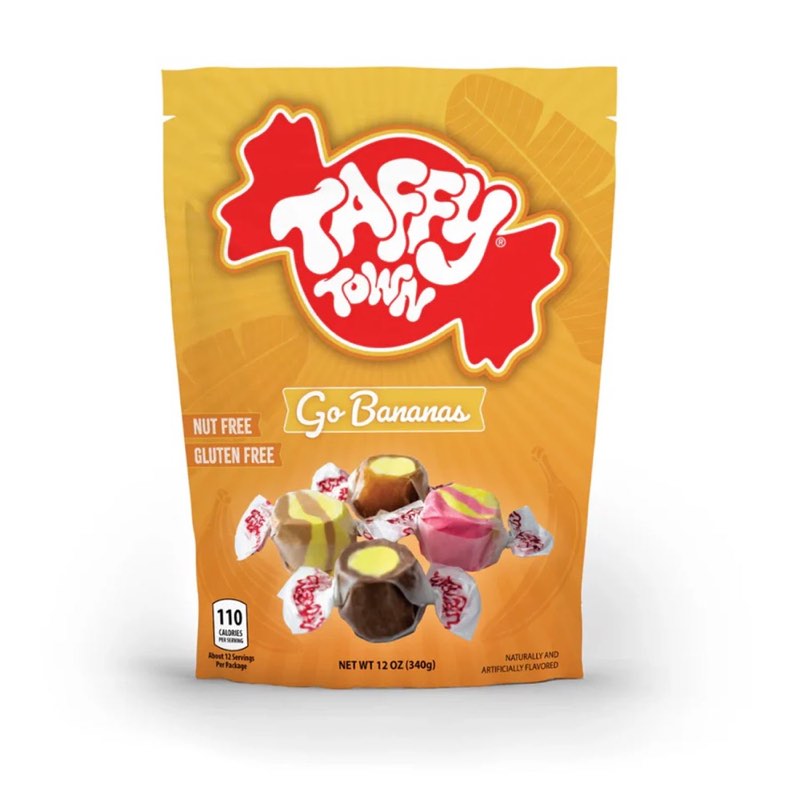
Against those, the single-flavour packs are a different purchase entirely. Go Bananas at 340g for £7.49 is the range's most committed one-note line, and single-flavour packs are bought by people who already know their answer. Putting one next to an assortment on a table is a good trick: the contrast makes both more interesting, because people compare rather than just eat.
If you want to browse the whole fruit direction across the shop rather than within one brand, the fruit flavour shelf runs to 161 products and is the largest flavour grouping we have.
Building a bowl with colour as the organising idea
Most pick-and-mix advice is about flavour. For a multi-coloured box, colour is the better organising principle, because colour is what people are actually choosing by when they reach into a bowl.
There are two ways to do it and they produce completely different tables.
The matched bowl. Pick a palette and stick to it. If you are running a red-white-and-blue theme, you want everything in the bowl to sit inside those colours, and you fill the gaps with confectionery that matches rather than with confectionery that tastes similar. This is the approach for a themed party where the table is part of the decoration. It takes more thought and looks considerably better, and the trick is to keep the number of items low — three matched items look designed, six matched items look like a jumble sale.
The deliberately clashing bowl. The opposite approach: make the multi-coloured box the loudest thing on the table and surround it with plain, single-colour, neutral items so it stands out. Haribo Gold Bears at £5.49 work here as a familiar, evenly coloured counterpoint that everybody recognises, and familiarity next to novelty is a good combination on a table where guests range from four to eighty.
Whichever you pick, three structural rules make a sweet table work.
- Vary the eating speed. A table of all-chews is slow and a table of all-gummies is over quickly. Mixing a chew box with a faster format gives people a choice about how long they want to be occupied, and they will make that choice unconsciously depending on whether they are talking to someone.
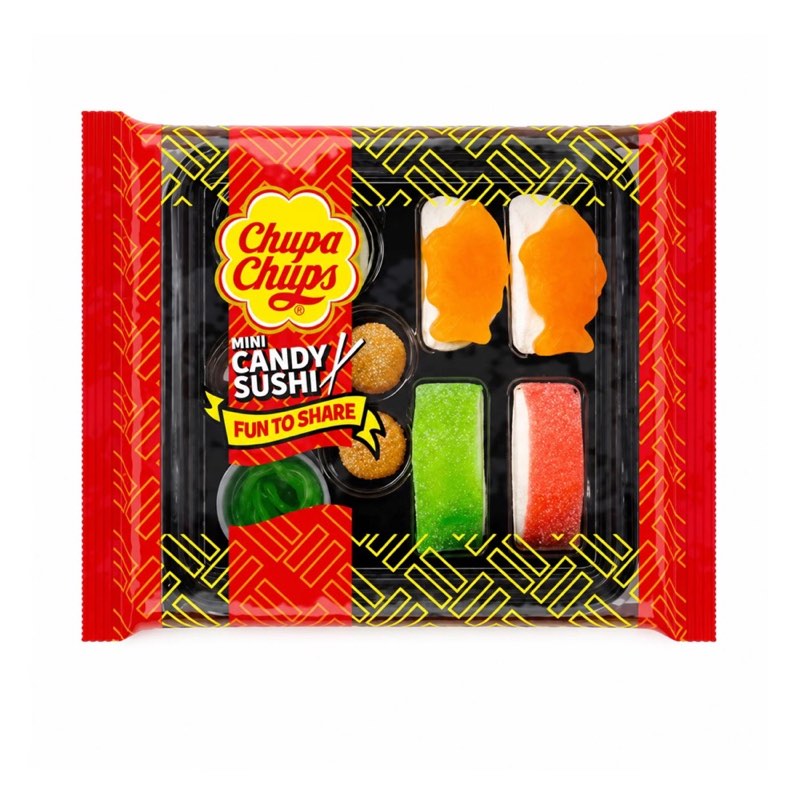
- Include one novelty. One item that makes people say "what's that" is worth more to a party than a fourth bowl of something good. The Chupa Chups Mini Candy Sushi Tray, 100g for £2.99 is the obvious pick — a tray-format novelty that reads as a joke and a centrepiece at once, and it costs less than three pounds.
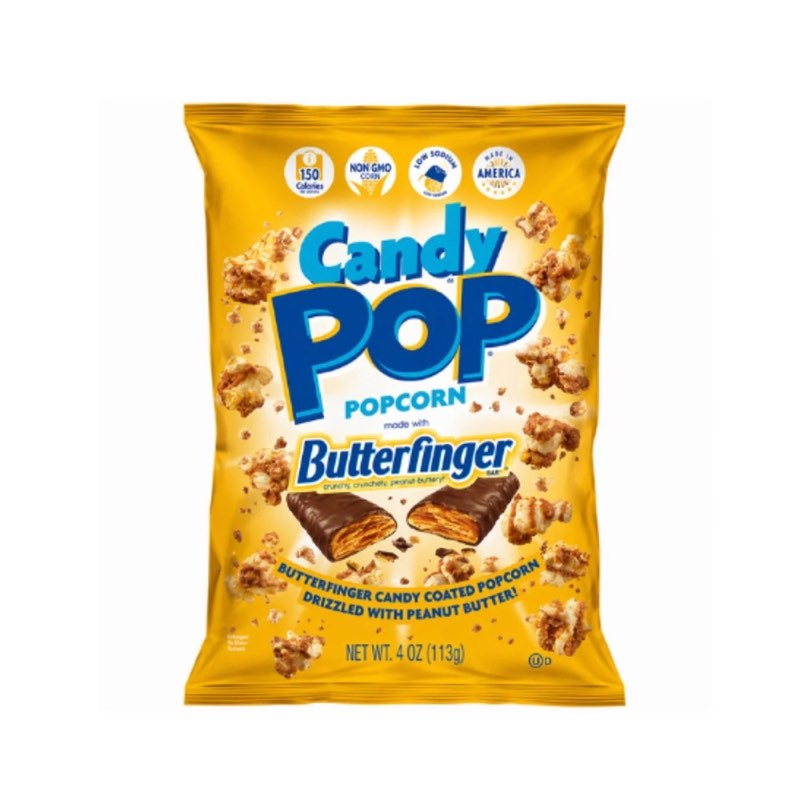
- Add one thing that is not sweet. A single savoury bowl resets people's palates and makes them come back to the sweets. The Doughbrik's Extra Cheesy Wavers Crisps, 126g at £4.99 are the straightforward version of this, and Candy Pop Butterfinger Popcorn at £4.49 for 113g sits between the two camps — sweet, but in a bowl-filling format that bulks a table out cheaply.
For a small, considered table rather than a large one, swap the volume items for one thing that looks more expensive than it is. Bolci Freeze Dried Dark Chocolate Strawberry, 80g for £4.49 is the neat option — a smaller, tidier item that changes the register of a table without needing a big bowl.
Who this is for, and who would be better off elsewhere
It suits, first, the person hosting something with a look. If you have a theme, a colour scheme or bunting, the colour on this box is the reason to pick it over a plain bag at a lower price.
Second, the gift-giver who is buying for people rather than a person — a staffroom, a team, a household. The box divides itself and nobody has to host it.
Third, anyone stocking a prize table, a stall or a fundraiser, where visual appeal at a distance and a recognisable sub-£10 value are the two things that matter.
Fourth, people who like the long chew specifically. If you are the person who always reaches for the chews in a mixed bag and leaves the gummies, 340g of them is a sensible amount to own.
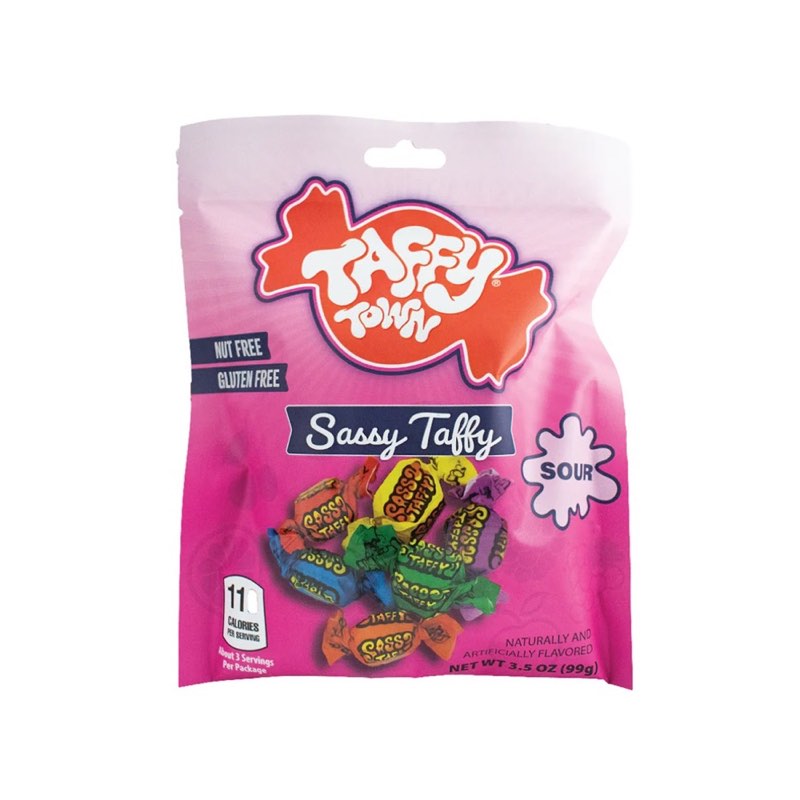
It does not suit three groups. If you want the most sweets for the least money — for a children's party where everything is going into bowls anyway — Sassy Taffy at the same 340g for £7.49 gives you identical weight for two pounds less, and nobody at a party ever sees the box. If you want speed rather than duration, a gummy or a jelly will suit you better than a chew. And if you are buying for someone with dental work, chews are the wrong category entirely and a soft or dissolving sweet is the kinder choice.
What £9.49 for 340g means when you put it next to the alternatives
Three hundred and forty grams at £9.49 comes out at £2.79 per 100g. That is a mid-table figure for our shelves, and it is worth seeing where it sits, because the spread across formats is wider than people assume.
| Product | Weight | Price | Per 100g |
|---|---|---|---|
| Candy Realms Tutti Frutti Tubes Tub | 780g | £7.99 | £1.02 |
| Maoam Pinballs Bag | 140g | £1.99 | £1.42 |
| Mike & Ike Mega Mix Sour Theatre Box | 120g | £2.25 | £1.88 |
| Taffy Town Sassy Taffy | 340g | £7.49 | £2.20 |
| This gift box | 340g | £9.49 | £2.79 |
| Chupa Chups Mini Candy Sushi Tray | 100g | £2.99 | £2.99 |
| Candy Pop Butterfinger Popcorn | 113g | £4.49 | £3.97 |
| Sour Patch Kids Chews | 60g | £2.79 | £4.65 |
Two things come out of that table. The first is that bulk tubs are in a different league on price per gram — if raw quantity is your goal, the 780g tub at £1.02 per 100g is nearly three times better value than this box and you should buy it without hesitating. The second is that small formats and novelty formats cost two to four times as much per gram, and people pay it cheerfully, because per-gram value is not the only thing anyone is buying.
What you are paying the extra for here is the presentation, and it is worth setting against what you would otherwise spend. A gift bag and tissue paper is two or three pounds. A greetings card is often the same again. The box replaces both, arrives finished, and looks better than a bag of sweets in a bag would.
On portions: assume adults graze 40–60g across an evening when there is other food out, which makes 340g roughly six to eight adult servings, or one bowl among several at a party of fifteen. Because chews are slow, those portions last longer in practice than the same weight of a faster format would — so a bowl of this at a film night for four is a comfortable two hours rather than a first act. For a prize or a single gift, the per-gram number is beside the point: what matters is that £9.49 reads as a proper item rather than a token, and 340g in a box does.
Stopping a box of chews welding itself into one piece
Chews have one specific storage failure that other sweets do not, and it is worth understanding rather than just being told to keep them cool.
The problem is that chews soften with warmth and, once soft, they settle against each other under their own weight. Left in a warm room for long enough, a box of individual pieces becomes a single mass with the shapes still faintly visible. This is not spoilage, and it does not stop anything being edible, but it does ruin a gift and it makes portioning impossible.
Keep it cool but not cold. A cupboard at normal room temperature is right. The fridge is the wrong answer even though it feels like the safe one: fridges are damp, and condensation on the surface of a chew makes it tacky when it comes back to room temperature. The freezer is worse still.
Keep it out of the sun and off warm surfaces. The top of a fridge, a shelf above a radiator, a sunny windowsill and the parcel shelf of a car are the four classic places people lose a box of chews. A car in summer is the worst environment we can think of for this product.
Keep it flat and not under anything. Pressure plus warmth is what causes welding. A box stored upright with two tins on top of it is asking for trouble; a box lying flat on a shelf with nothing on it will be fine.
Keep it dry. Humidity makes surfaces sticky. Kitchens are the most humid rooms in most houses, and the cupboard above the kettle is the single worst cupboard in a kitchen. A hall cupboard or a bedroom shelf is better, and has the side benefit of being somewhere nobody looks if you have bought it in advance as a present.
If it has already stuck, an hour somewhere genuinely cool will firm the pieces enough to separate them by hand. Do not try to prise apart warm chews; you will tear them and end up with a worse-looking box than you started with.
Once it is open, close the lid between sessions. If it is down to the last third and you are not going to finish it soon, move the remainder into a sealed tub and keep the box for whatever you are giving away next.
One size only, and the ladder either side of it
This is listed in a single size — 340g at £9.49 — and it is in stock. There is no larger or smaller version of the same box, so the choice is really between this and the things around it. Three routes are worth spelling out.
Down a step, for less money. If you want chews and do not need presentation, the bagged 340g lines at £7.49 give you identical weight for two pounds less. For much less again, the Maoam Pinballs at £1.99 for 140g and the Drumstick ten-pack at £2.50 are the two cheapest chewy things on this page and both are perfectly good for a bowl.
Up a step, for quantity. The 780g tutti frutti tub at £7.99 is more than twice the weight of this box for fifty pence less. It is a bulk container rather than a gift item and it looks like one, but for a party of thirty it is the correct purchase and this box is not.
Sideways, for variety. Three different smaller items at around three pounds each come to roughly the same money as one box and give you three things to put out instead of one. That is the better shape for a hamper, a parcel or a children's party, and the worse shape for a present you are handing to one person at a door.
The shelves this lives on, and the ones next to it
This box appears on three shelves, which is more than most products and makes it easy to find from several directions.
Its brand home is the 3D listing, which carries 22 products including the popcorn and the crisps linked above — a mixed shelf, so browse it rather than searching it. Its texture home is the chewy category, 78 products deep, which is the right place to start if the long chew is the thing you are actually after. And its flavour home is the fruit shelf, at 161 products by far the biggest flavour grouping we run, which is where to go if you want to compare fruit across every format we stock rather than within one brand.
Next door to those, four shelves are worth knowing. The jelly and gummy section is the natural contrast to chewy and the place to build a mixed-texture bowl from. The retro listing is where the penny-tray descendants cluster. The Kingsway and Haribo brand shelves cover the traditional weigh-out end and the gummy mainstream respectively. And above all of them, the full shop listing is the right starting point when you are assembling a spread rather than hunting one product, because it lets you scan weights and prices side by side — which, as the table above shows, is where the real differences live.
Straight answers to what people ask us
What does "multi coloured" actually mean here?
It is the colour description our supplier lists for this box, and it tells you the assortment is mixed rather than uniform. We do not have a breakdown of which colours in what proportion, so we will not guess at one. In practice the useful consequence is that people pick by eye from a mixed bowl, which makes the box last longer on a table than a single-colour sweet does.
What flavours are in it?
The listing gives the flavour as fruit, without breaking it down further, so that is as specific as we can honestly be. If you want a named flavour, several other lines in the range say exactly what they are on the front — the banana, caramel and berries-and-cream packs among them — and those are the ones to buy when a specific taste matters.
How chewy is chewy?
Chewy means a piece you work on for a minute or two rather than one that dissolves or that you bite through in three goes. Flavour comes out gradually across that time rather than in a rush at the start. It is the slow end of sweet eating, which is why a given weight of chews goes further at a party than the same weight of gummies.
Is £9.49 a fair price for 340g?
It works out at £2.79 per 100g. That is more than the bagged 340g lines at £2.20 and considerably more than a bulk tub at around £1.02, and less than most small or novelty formats, which run from £3 to over £4.50 per 100g. You are paying roughly two pounds for the box and the theme, which is about what you would spend on a gift bag and tissue paper anyway.
Is the flag theme a claim about where it comes from?
No. It is artwork printed on a lid. We do not hold origin information for this line and we do not make any claim about it. Buy it for the look, which is what themed packaging is for.
Will it melt in summer?
Chews handle warm weather better than chocolate, which is why they are a reasonable choice for a garden table. What they do in heat is soften and settle together, so keep the box out of direct sun, off warm surfaces and out of the car. If pieces have stuck, an hour somewhere cool firms them up enough to separate cleanly.
How many people will it serve?
Roughly six to eight adult grazing portions of 40–60g if there is other food out, or about ten small shares of 34g each. Because chews take a while to eat, those portions occupy more time than the same weight of a quicker sweet, so a bowl at a film night for four will comfortably see out a long film.
Is it a good raffle or tombola prize?
Very much so. Prize tables need items in the £5–£15 band that look worth winning from across a room, need no size or preference, and keep until the event. A bright box of sweets is one of the few things on a prize table that appeals equally to a six-year-old and a pensioner.
Can I put it in the post?
Yes. There is nothing to melt into a mess, nothing needing refrigeration, and a rigid box protects its own contents. Send it inside a box outer so the corners arrive square, and check the depth against the letterbox if there is a chance nobody will be home.
Is it suitable for children?
Sweets are a treat. Small hard sweets and whole chews are a choking risk for young children, so keep an adult nearby when little ones are eating them. Beyond that, whether a particular child should have it is a judgement for whoever is looking after them.
How do I check allergen information?
Read the manufacturer's packaging on the box when it arrives, before anyone eats from it. That printed label is the authority, and it is especially worth doing before you put the box out for a group where you do not know everyone's circumstances. We do not publish ingredient or allergen detail for this line on the site.
What single item should I add if I am only adding one?
Something with a different texture, not a different flavour. A bowl of chews next to a bowl of gummies gives people a choice of pace, and they will move between the two without thinking about it. A bowl of chews next to another bowl of chews just looks like a lot of chews.
Worth knowing before you add it
This is 340g of multi-coloured fruit chews in a flag-themed box at £9.49, and the box is a real part of what you are buying. The colour makes it a table item rather than a cupboard item; the chew makes it a slow sweet that stretches further than its weight suggests; the format makes it a present you can hand over without wrapping, a prize that looks worth winning, or a parcel anchor that will survive the journey. If you want the same sweets for less and do not care what the packaging looks like, the bagged 340g line saves you two pounds. If you want quantity above everything, the bulk tub wins on price per gram and it is not close. But if the thing has to look like something when it lands on a table, this is what the extra two pounds buys, and it buys it well.
More from 3D
More chewy sweets
More fruit sweets
Where this sits
Taffy Town Stars And Stripes Gift Box 340g appears on these shelves. Browse them, or jump to something nearby.
You might also like