Home / Loose Sweets / Haribo Wine Gums 160g
Haribo · 160g
Read the full guide
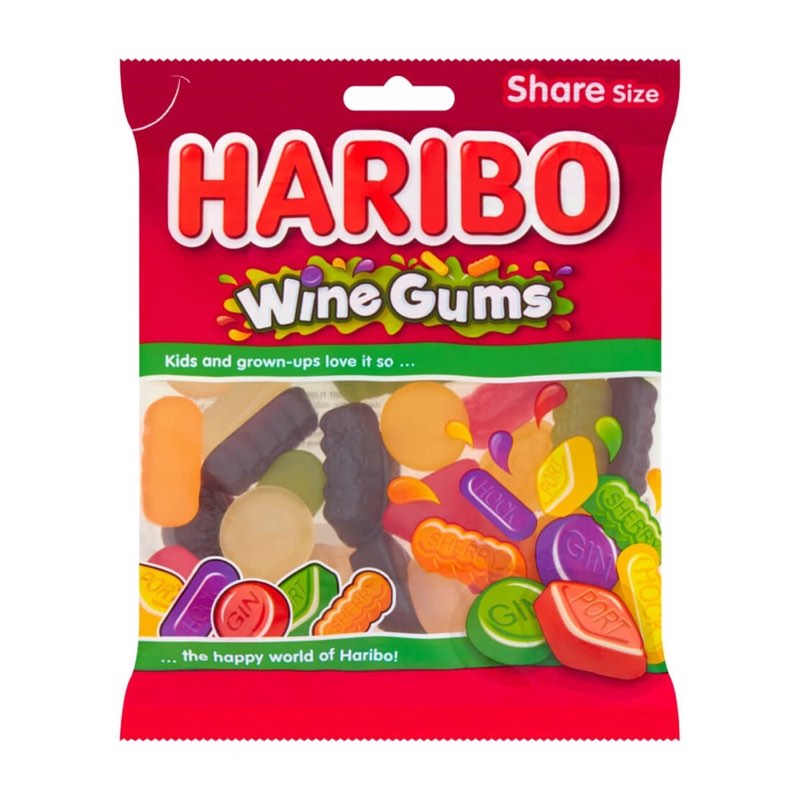
Haribo Wine Gums 160g
£1.99
✔ In stock — ready to ship
Fresh stock
Free over £20
Same-day dispatch
Secure checkout
Anybody who has built a pick and mix properly knows the feeling of getting it wrong. You choose ten things you like, you tip them into one bag, and somehow the result is worse than any of them on their own — too soft all the way through, or too sour, or so uniformly sweet that after five minutes nothing registers. A good mixed bag is not a list of favourites. It is a structure, and the pieces in it have jobs.
Haribo Wine Gums 160g is one of the great structural sweets. In a mixed bag it does the thing nothing else quite does: it slows the eating down. Most of what sits on the jelly and gummy shelves is quick — soft, springy, three chews and gone. A wine gum is firm. It holds out. It makes you work through it while everything around it is disappearing, and that changes the rhythm of an entire bag.
The full guide to Haribo Wine Gums 160g
5,235 words on how it eats, who it suits, how to serve it and what to put beside it.
The job a firm gum does in a mixed bag
Why pacing is the thing a mix most often lacks
Left to themselves, people eat a mixed bag at a constant fast rate and stop when they feel slightly ill. Put something firm in the mix and the rate drops, because every few pieces the eater hits one that takes thirty seconds instead of five. That pause does two useful things: it lets the flavours of the previous pieces clear, and it stretches the bag. The same weight of sweets lasts noticeably longer when a fifth of it is firm.
This is why a bag made entirely of soft jellies feels less satisfying than its weight suggests, and why the old sweet shop mixes always had something chewy or firm running through them. It was not conservatism. It was pacing.
Ratios that actually work
A practical structure for a mixed bag, in rough proportions:
- Half soft and familiar. The comfortable bulk — small soft jellies and fruit shapes that everyone will eat.
- A fifth firm. This is where a wine gum belongs, along with anything else that resists the teeth.
- A fifth sharp or sour. Enough to reset the palate, not enough to dominate.
- A tenth novelty. The pieces people pick up and comment on.
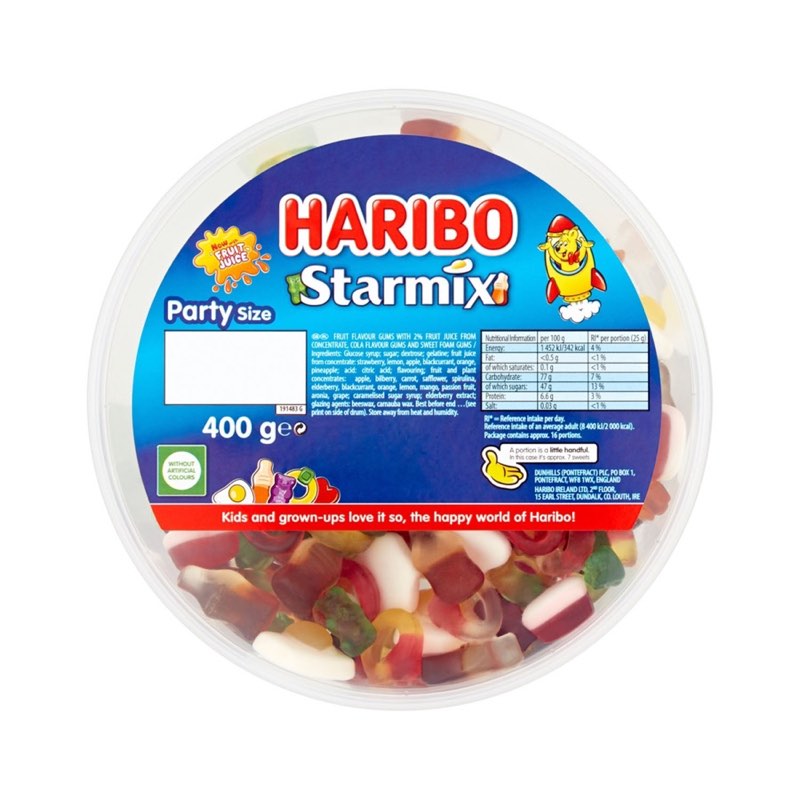
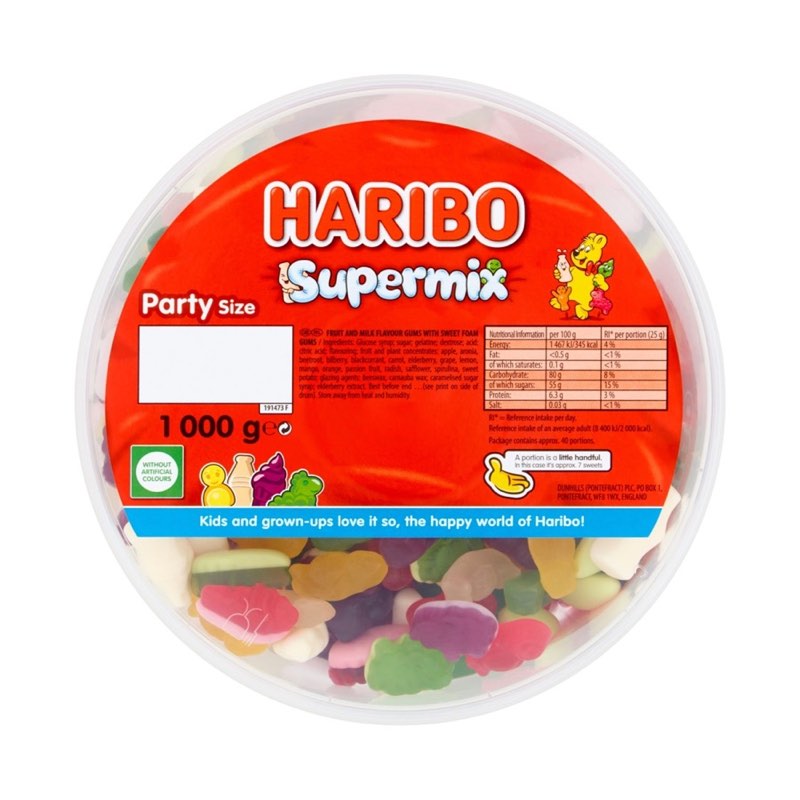
For the soft half, a mixed tub is the efficient base. The Starmix tub at £4.99 is the standard choice because it already contains several shapes and textures, so one purchase covers a lot of ground. If the bowl is permanent rather than occasional, the 1 kg Supermix tub at £11.99 is the same idea at four times the scale.
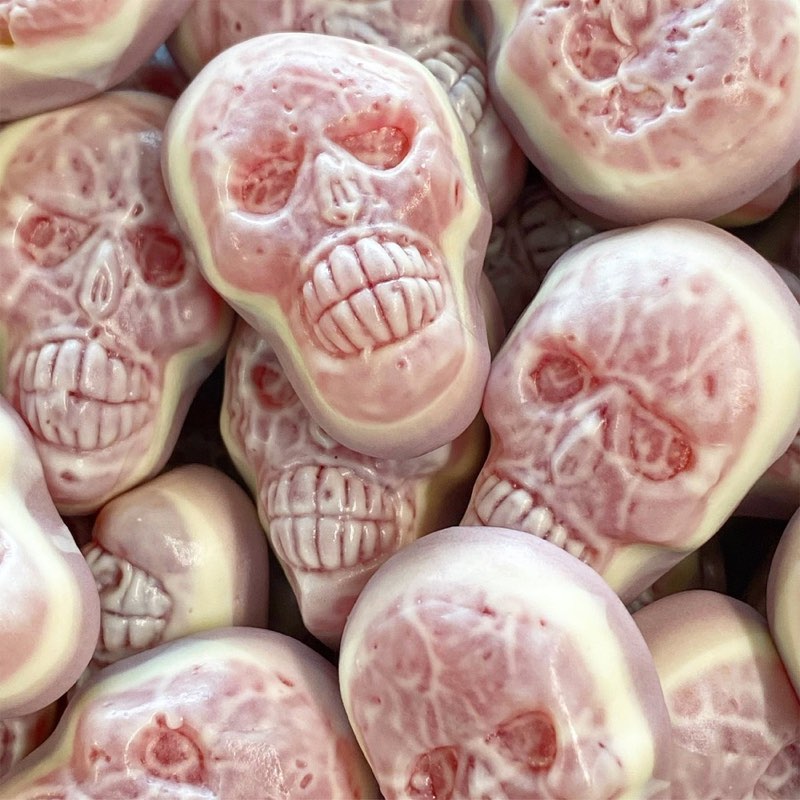
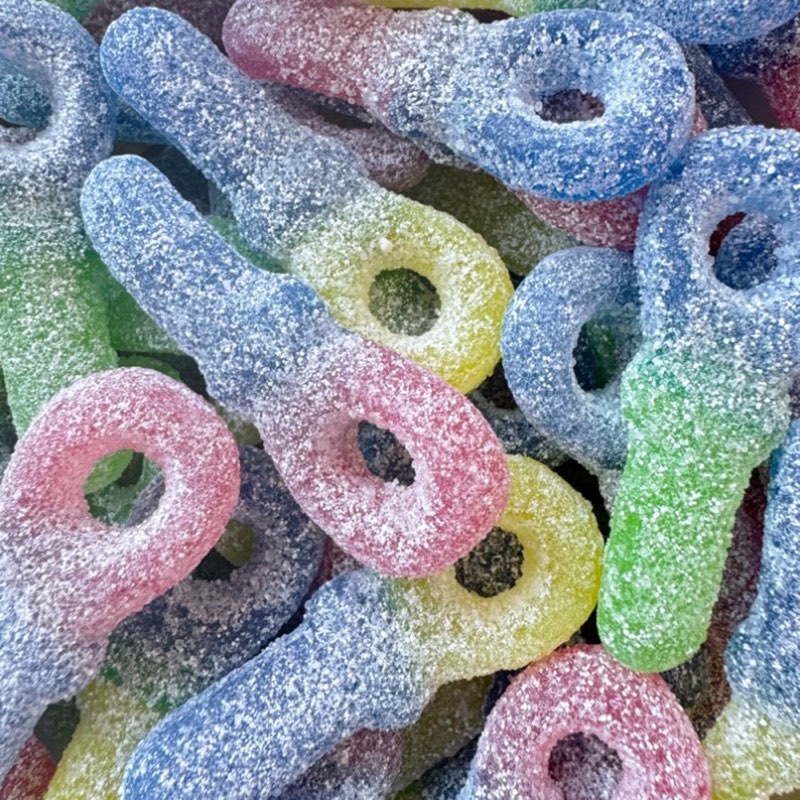
For the sharp fifth, you want something that cuts rather than merely tastes of fruit. Dulce Plus sour strawberry rings at £5.49 are the natural pairing here because they share a flavour direction with this bag while adding the sour edge, so the mix stays coherent instead of turning into a jumble. If you want the sour turned up considerably further, BUBS Big Sour Skulls at £7.50 are the serious version and should be used in smaller proportion than you first think.
What not to put next to a wine gum
Two things clash. The first is anything with the same firmness — two firm gums in a bag do not contrast, they compete, and the eater simply stops reaching for whichever they like less. Taveners Fruit Jellies at £5.49 are excellent and occupy adjacent territory, which is exactly why they belong in a different bag rather than this one. Choose one firm line and build round it.
The second is anything with a very strong, lingering flavour that carries into the next piece. A firm gum takes half a minute to eat, so whatever you ate before it is still present for most of that time. Put something powerful directly alongside and you spend thirty seconds tasting the previous sweet rather than this one. Keep the assertive lines to a small share and the mix reads much cleaner.
Building a texture ladder in one bag
The most satisfying mixes are the ones where you can feel a range of resistance, from things that dissolve to things that need chewing. Laid out as a ladder, this bag sits near the top and everything else arranges itself beneath it.
At the softest end, a bag of mini mochis at £1.35 brings a yielding, powdery-surfaced texture that is unlike anything else on the counter and makes the firm pieces feel firmer by contrast. In the middle sit the standard soft jellies and the filled shapes — Kingsway filled whales at £5.49 add a two-part bite, soft outside and softer in, which is its own small event. Vidal gummi ice pops, also £5.49 bring a shaped novelty at the same shelf price with a springier character. And at the firm end, the wine gums.
Arrange four or five lines along that ladder and a mixed bag becomes interesting to eat rather than merely plentiful. That is the difference between a bag of sweets and a proper pick and mix.
How it looks in the bag
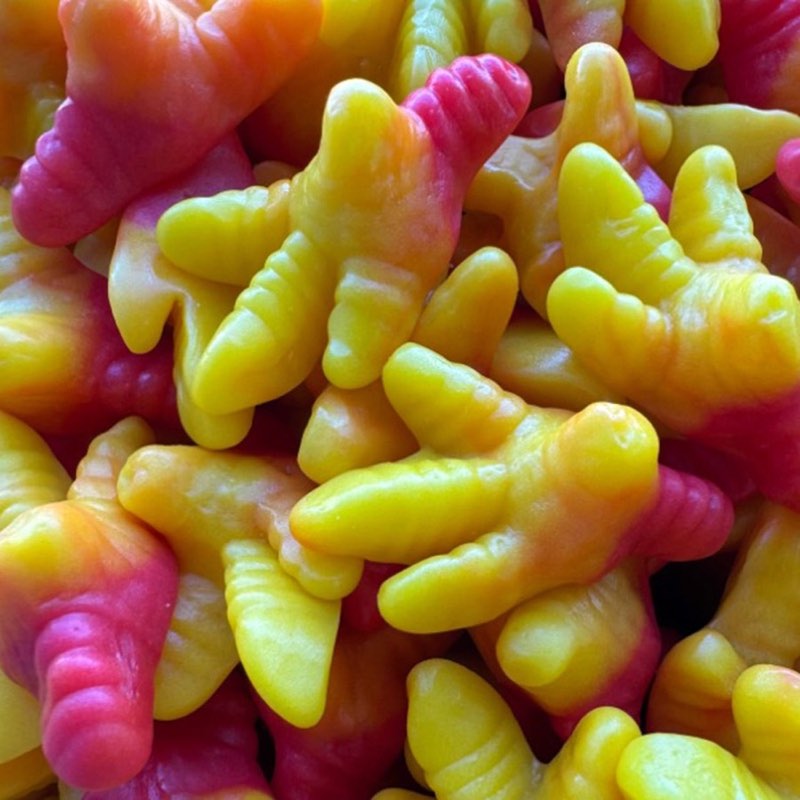
Appearance matters more in a mix than in a single-line bag, because a mix is looked at before it is eaten. Our listing records the colour on this line as green, and a run of deeper-toned pieces through a bag of brighter ones does something useful: it gives the eye somewhere to rest. A bag of uniformly bright sweets reads as cheap; a bag with tonal range reads as a sweet shop.
If you want the counterweight — a jolt of colour at the other extreme — Friendship Rings in the 480 g bag at £8.99 are the obvious choice from the same brand, and the ring shape stacks visibly on top of a mixed bag rather than sinking into it. A single large piece on top works too; a jumbo peelable banana gummy at £2.99 laid across the top of a bowl of small pieces is a deliberate bit of staging and costs less than three pounds.
Practicalities of weighing and bagging
Two things to know if you are assembling mixes at home. First, firm gums do not compress, so they take up more space per gram than soft jellies — a bag that looks the same size will weigh less if it is heavy on firm pieces. Weigh rather than eyeball if the portions need to be equal.
Second, mix at the last moment where you can. Different sweets left in contact for days will exchange surface moisture, and the firm pieces soften slightly while the soft pieces stiffen. It does no harm, but the texture ladder you built flattens out. If you are making up bags in advance for a party, a day ahead is fine; a week ahead and you have lost the contrast you were paying for.
If assembling is not how you want to spend an evening, the ready-made jars and pouches in the pick and mix section are already balanced along these lines and save you the weighing entirely.
A small bag, and what is in it
This is a 160 g bag at £1.99 — a one-size line, no ladder of weights to choose between, and a size that sits comfortably in a coat pocket or a bag. It is small enough to be an impulse and large enough to share, which is a narrow and useful band. Two people will get through it over a film without anybody feeling short-changed.
The format is a firm gum, filed under the jelly and gummy type along with ninety-odd other lines, though it sits at the resistant end of that category rather than the bouncy middle. The flavour side of the listing carries two tags — fruit, our largest flavour grouping, and strawberry specifically, which is a big shelf in its own right.
Tipped into a dish, these come out as distinct, substantial pieces rather than a scatter. You can pick one up and look at it, which is not true of the smaller gummies, and that changes how people eat from a bowl — one at a time, chosen, rather than by the handful. It is a more deliberate sweet than most of what surrounds it.
The chew you have to earn
The first press of a wine gum tells you immediately that this is not an ordinary soft sweet. It does not give. The teeth meet a genuinely firm body that holds its shape under real pressure, and for a moment nothing happens at all. Then it yields — slowly, not all at once, more of a compression than a collapse.
That slow yield is the whole character of the format. A springy gummy bounces back at you; a chew folds; a wine gum compresses and stays compressed, working down gradually over twenty or thirty seconds. You are not chewing so much as pressing, and the piece gets smaller and denser as you go rather than breaking apart.
Flavour behaves differently under that regime too. It does not arrive in a rush. Because the surface area exposed to the tongue increases slowly, the flavour builds rather than peaks — the first five seconds are muted, the middle is the strongest, and there is a long tail as the last of the piece dissolves. It is the closest thing on a sweet counter to a slow release, and it is why one wine gum registers as a proper sweet when one small jelly does not.
The end is clean. A firm gum finishes without leaving residue on the teeth, and it does not coat the tongue the way something sugar-dusted does. What lingers is a fruit note, present but not loud, which is why people can eat several of these in a row without the flavours blurring into one another the way they do with a more aggressive line.
Temperature makes a real difference here, more than with a softer sweet. Cold, these are properly hard work and take twice as long; a few people prefer them that way precisely because the piece lasts. Warm, they soften into something closer to a conventional chew and lose some of the resistance that makes them distinctive. Room temperature is where the format is at its best, and it is worth letting a bag come up from a cold car before you judge it.
Strawberry, and the wider fruit set
The listing carries two flavour tags on this line, and they work at different levels. Fruit is the broad family — the general set of bright, recognisable profiles that most British sweets are built from. Strawberry is the specific one that a great many shoppers seek out by name.
Strawberry is the most reliably popular single flavour in confectionery and it is worth asking why. Partly it is familiarity: it is the flavour people met first, in childhood, and preferences formed that early are extremely durable. Partly it is that it works in every format — it survives as a hard sweet, a soft jelly, a firm gum and a chew, which is not true of more delicate profiles. And partly it is that it sits well next to almost anything. Strawberry does not fight the sweets around it.
In a firm gum specifically, strawberry gets the benefit of the slow release described above. A fast sweet gives you the sharp top of a strawberry note and little else; a slow one gives the rounder, jammier middle time to come through. That is a meaningful difference in how the flavour reads, and it is the argument for eating strawberry in this format rather than in something that disappears in three seconds.
If strawberry is the thing you are actually chasing, the strawberry shelf runs to well over seventy lines across every texture we stock — the fastest route to comparing how one flavour behaves in different formats. And if you want the flavour with a sour edge instead of a mellow one, the sour strawberry rings are the same profile approached from the opposite direction.
Who keeps coming back to these
Firm gums have an unusually loyal and unusually adult following. People who find most modern sweets too soft, too sour or too aggressively flavoured tend to end up here, because this is the format that asks something of the eater and repays it. If you have ever thought a bag of sweets was gone too quickly, this is the answer to that complaint.
They suit anyone who wants a sweet to last without wanting a chew. The eating is slower but it is not sticky work, and there is no jaw ache at the end of a bowl. That makes them a good fit for long, slow contexts — a drive, a long evening, a book — where the point is to have something going on rather than to eat quickly.
They suit mixed-age gatherings too, because there is nothing in a firm fruit gum to catch anybody out. No sour ambush, no fizz, no novelty. Grandparents eat them, which is genuinely not true of most of the counter, and that alone makes them worth a compartment on a family sweet table.
Where they are the wrong choice: for very young children, because firm whole sweets are a choking risk and need an adult sitting with them — and in general, sweets are a treat rather than everyday food. They are also the wrong choice for anyone who wants intensity. If you like your sweets loud, a slow-building firm gum will read as underpowered and you should be on the sour shelves instead.
Curating a sweet shelf, and why heritage formats outlast the novelties
There is a kind of shopper who treats the sweet counter as a collection rather than a grocery list. Not a hoarder — a curator. They want a shelf that holds a range, that has something in it from each corner of the counter, and that can produce the right thing for the right moment rather than just producing sugar. If that is you, this section is the one that matters.
Curating is subtraction, not accumulation
The mistake most people make when they start buying sweets deliberately is simply buying more of them. A good shelf is not defined by how many lines are on it but by whether each one is doing a distinct job. Two soft fruit jellies and no firm gum is a worse shelf than one of each. Three novelties and nothing plain is a shelf you cannot actually eat from.
The test to apply to any purchase is simple: what does this do that nothing else on the shelf already does? A firm gum passes that test in almost every collection, because firmness is a job very few lines are doing. A fourth soft gummy usually fails it, however good the individual sweet is.
The permanent core and the rotating edge
Think of the shelf as having two zones. The core is permanent: a handful of lines you always have, chosen for range rather than excitement. Something firm, something soft, something sharp, something mixed. The edge rotates: seasonal shapes, one-off formats, things you saw and wanted to try.
The core is what makes the edge worth having. A seasonal novelty eaten alongside the same four things you always have is a genuine event; a seasonal novelty eaten alongside eleven other novelties is just more sugar. The mixed tub and a firm line like this one are the least glamorous things on a curated shelf and the two that make everything else land.
The box as an object
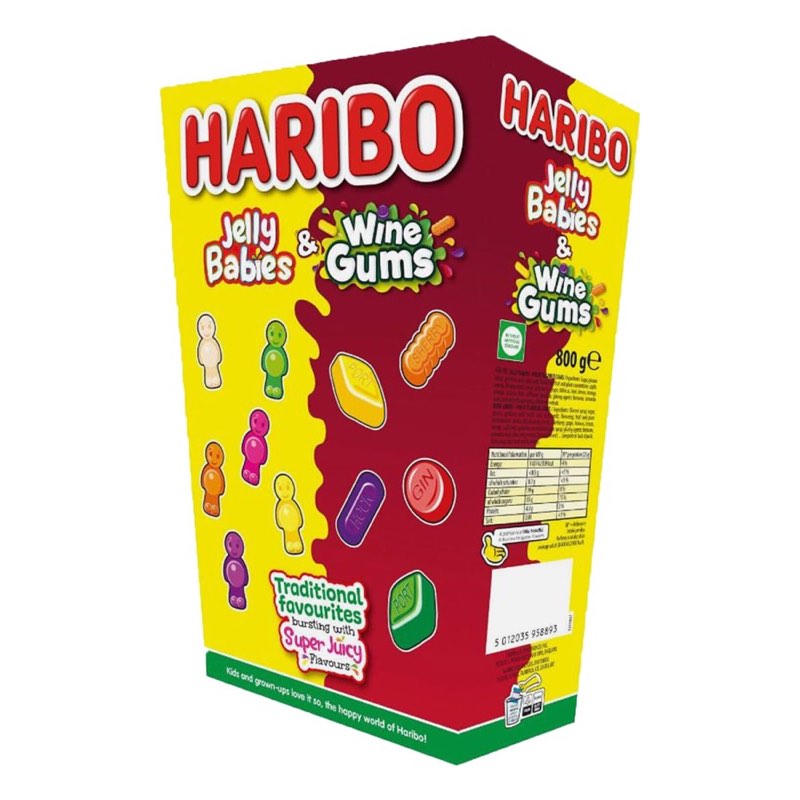
Collectors care about containers, and confectionery has always understood this. The 800 g jelly babies and wine gum gift box at £6.99 is the obvious upgrade path from a bag, and what you are buying is not only eight hundred grams of sweets but a presentable object that can sit out, be handed over, or be opened in front of people. Its sibling the 800 g Megastars box, also £6.99, does the same job with a different mix inside.
What is worth noticing is that at that weight and price the boxes work out at 87p per 100 g, which is cheaper per gram than this bag at £1.24. That is an unusual state of affairs — presentation almost always costs money — and it means the collector's instinct to buy the box is, for once, also the economical instinct. The catch is commitment: 800 g is a lot to have open at once, and a box that sits half-finished for two months is a worse purchase than a bag finished in a week.
Format variants are the real collection
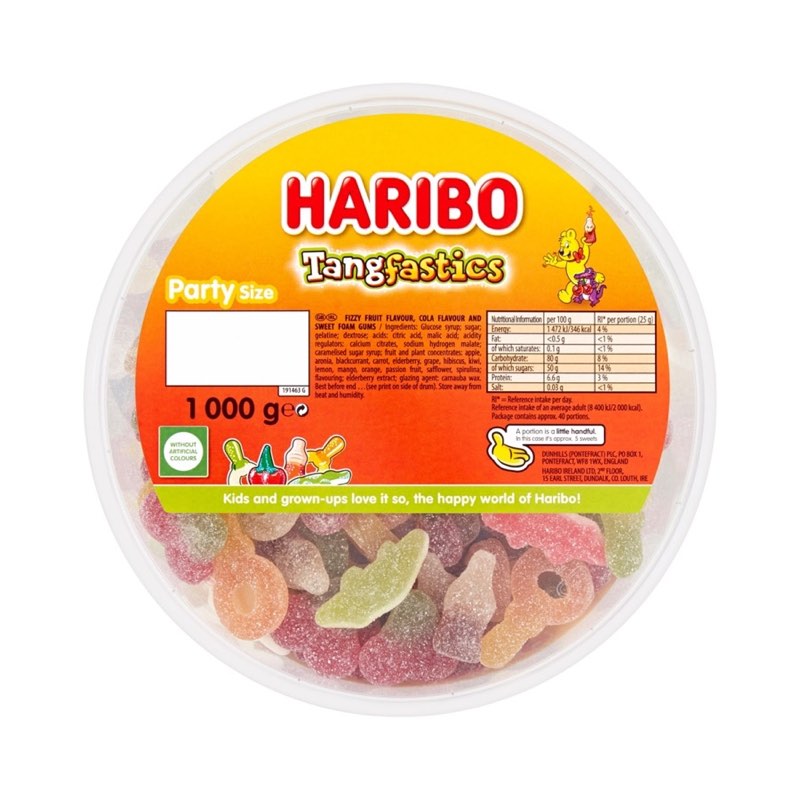
The most rewarding way to collect sweets is not by brand or by flavour but by format — gathering the same idea expressed in different shapes and sizes and eating them against each other. The Haribo range alone runs to forty-odd lines and supports this properly: a firm gum here, a giant moulded piece in the giant cola bottles at £5.49, a sour mix in the 1 kg Tangfastics tub at £11.99, a ring format in the 480 g Friendship Rings bag.
Put those side by side and you learn more about what you actually like than any amount of reading will tell you. Most people discover that their loyalty is to a texture rather than a flavour, and that changes how they shop from then on.
The hoarding trap
Every collection of edible things has the same failure mode: the collector stops eating it. Sweets bought because they were interesting sit unopened, go past their best, and eventually get thrown away, which is the opposite of the point. Novelty formats are especially prone to this, because the appeal is in the object — a DIY handmade Ferris wheel kit at £2.99 is bought to be built, and a kit you never build is a kit you did not want.
The discipline that fixes it: buy novelties with an occasion already in mind, and buy plain lines for the cupboard. A shelf with a rule like that stays alive. A shelf without one turns into an archive.
Running a tasting flight
The best use of a curated shelf is to put four or five lines on a table and go through them in order, which is a genuinely good way to spend half an hour with people who like sweets. Order matters — go from soft to firm and from mild to sharp, because the other way round flattens everything that follows.
A workable flight: start with something yielding like the mini mochis, move to a standard soft jelly, then to a filled shape such as the filled whales, then to this firm gum, and finish with something sharp like the big sour skulls. Five lines, four clear steps of texture, and everybody at the table ends up with an opinion they did not have an hour earlier.
What £1.99 comes out at
The arithmetic is quick on a one-size line. 160 g for £1.99 is £1.24 per 100 g. In practical portions, that is roughly six small 25 g servings or a little over three 50 g counter handfuls, working out at about 31p per small serving and 62p per handful.
Against the neighbours, that sits mid-table. The two 800 g gift boxes at £6.99 come out at 87p per 100 g and are the cheapest weight in the brand's range. The kilo tubs at £11.99 land at £1.20, fractionally under this bag. The 480 g Friendship Rings bag at £8.99 works out at £1.87, and a single jumbo banana gummy at £2.99 for 136 g is £2.20 — the price of buying one large object rather than many small ones.
The useful conclusion is that bag size and unit price are only loosely connected here. What you are choosing between is not cheap and expensive but portion and presentation: a bag you will finish, a tub you will ration, or a box you will give away. Pick on that basis and the pennies per 100 g take care of themselves.
One planning figure worth keeping: at 40 g a head, this bag serves four people a modest portion each. It is a film-night size, not a party size. For a party, buy the weight in a tub and use bags like this one to add lines the tub does not cover.
Occasions that suit a slow sweet
Because these take longer to eat than almost anything else in the soft-sweet category, they earn their place at the long occasions rather than the fast ones.
Long journeys. The classic use. A firm gum occupies a passenger for half a minute at a time and a bag lasts most of a motorway stretch. They do not melt, they do not crumble, and an open bag survives being rolled shut in a door pocket.
Working evenings. Something that sits in a dish beside a laptop and gets reached for occasionally is a very different purchase from something that vanishes in ten minutes. This is the former.
Family sweet tables. On a table of mixed generations, a firm fruit gum is the compartment that empties evenly rather than being cleared by the children in the first ten minutes. It is also the one the adults will admit to going back for.
Valentine's and other dated tables. A plain fruit gum is season-neutral, which makes it the thing you build a themed table around rather than the theme itself. Pair a bowl of these with something shaped for the date — Barratt jelly love hearts at £5.49 are the obvious February choice — and the table reads as considered rather than as one novelty on its own.
Hampers. A small bag works well as the layer under something larger. Put one of the £6.99 boxes on top, add a couple of the oddities from the candy and chocolate listing, and tuck a bag or two of plain firm sweets underneath for the part that actually gets eaten in week two.
Sharing with someone who does not eat sweets much. Firm fruit gums are the least intimidating thing on a modern sweet counter. No sour coating, no fizz, no unfamiliar texture. If you are offering sweets to someone who last bought any twenty years ago, offer these.
Looking after them
A firm gum is the most robust thing in its category, which is one of its quiet advantages. It does not crush, it does not melt at normal room temperatures, and it survives a coat pocket better than anything with a coating on it.
The one thing to manage is air. Left open, firm gums dry from the outside and go from firm to genuinely hard, which some people like and most do not. A clip on the bag or a lidded jar is all it takes. With a 160 g bag this is rarely a real problem, since most households finish it well before it becomes one.
Warmth softens them and takes the edge off the resistance that makes the format worth buying. A bag in a hot car for an afternoon will come back slacker and the pieces may press together. Cool and dark keeps them exactly as they should be. The fridge is unnecessary and makes them very hard indeed; that is a preference rather than a storage method, and if you go that way, eat them straight out rather than letting them sit and sweat.
As with everything on the loose and bagged shelves, keep the original packaging until the bag is finished so the manufacturer's own information is there if anybody needs to check something before eating.
One size, and where to go for more
We list this line in a single size — 160 g at £1.99 — so there is no weight ladder to work through. The question that follows is what to do when one bag is not enough, and there are three sensible answers depending on what "not enough" means.
If you want more of these specifically, buy more bags. Three bags is 480 g for £5.97, which keeps two of them sealed while you eat the first — better texture at the end than one large opened container would give you.
If you want firm gums as part of something bigger, the 800 g box at £6.99 is the route, and it is the best value per 100 g in the brand's range alongside the Megastars box at the same price. It also pairs the firm format with a softer one in a single container, which solves the texture-range problem in one purchase.
If you want weight and variety rather than more of one thing, a kilo tub is the answer — Supermix for a broad mix or Tangfastics if the household leans sour, both at £11.99. Those are the foundations; this bag is the specific thing you add on top of one.
The shelves this sits on
Five listings carry this line, which is more than most, and each is a different way in. The loose sweets section is the big one — over three hundred and fifty lines sold by bag and by weight, and the place to browse if you are building an order rather than looking for something specific.
The Haribo brand listing is how people who already know what they like tend to shop, and with forty-odd lines it is small enough to read end to end. The jelly and gummy type shelf is the texture route, and worth using if firmness is what you are after and the flavour is negotiable. The fruit flavour listing is our largest at over a hundred and sixty lines, and the strawberry listing narrows that to the single most-requested profile.
Further out, the full shop holds everything in one place, the pick and mix range has the pre-built jars and pouches if you would rather not assemble a bag yourself, and the Kingsway listing is the one to know for traditional British loose lines, including several shapes you will not find elsewhere. For anything boxed or chocolate to complete an order, finish on the candy and chocolate shelf.
Things shoppers ask before buying
Is there any alcohol in these?
We do not publish ingredient information for this line and we are not in a position to tell you what is or is not in it — the manufacturer's own packaging is the only reliable source, and it comes with your order. The name is a long-standing one on the British sweet counter rather than something we can interpret on the maker's behalf. If this matters for you, for religious reasons, for a child or for anything else, read the pack before anyone eats from it.
How firm are they, really?
Firmer than almost anything else in the jelly and gummy category. The first bite meets genuine resistance and the piece compresses gradually rather than collapsing, so one sweet takes twenty to thirty seconds rather than three or four. If you have only eaten soft modern gummies, expect them to feel like considerably more work — that is the point of the format, and it is why a bag lasts.
What does 160 g actually give me?
About six small 25 g portions, or just over three 50 g counter handfuls, at roughly 31p and 62p each respectively. For two people over a film, that is comfortable with a little left. For four people it is a modest portion each. For anything bigger than that you want a tub as the base and bags like this as the additions.
Are they suitable for young children?
Firm whole sweets are a choking risk for young children and should only be eaten with an adult present and watching. Sweets in general are a treat rather than everyday food. Beyond that, whether a particular child should have them is a judgement for whoever knows them, and if allergies or intolerances are in the picture, the manufacturer's packaging on arrival is the thing to read.
Why put them in a mix rather than eat them on their own?
Because they do something to the pieces around them. A firm gum slows the eating of an entire bag, which makes the whole thing last longer and gives the flavours of the softer sweets room to register. They are excellent on their own, but they are one of the few lines that genuinely improves the sweets it sits next to, and that is a rarer property than it sounds.
Is a bigger pack better value?
Sometimes, and by less than you would expect. This bag is £1.24 per 100 g. The 800 g boxes at £6.99 are 87p, the kilo tubs at £11.99 are £1.20, and the 480 g ring bag is £1.87. So the boxes genuinely beat it and the tubs barely do. Buy the size that matches how fast you will eat it, because an opened container that sits for months loses more in quality than you saved in pence.
Do they keep well?
Very well, sealed. They are among the most robust things we sell — no melting, no crumbling, no crushing. Opened and left out, they dry and harden over a week or two, which is the only real failure mode and is entirely preventable with a clip or a jar. Keep them cool and dark and out of direct sun and the last one will eat much like the first.
What should I put with them for a children's party?
Something bright and something soft, so the table has range. Gummi ice pops at £5.49 bring a recognisable shape that children pick out immediately, and filled whales at the same £5.49 add a soft two-part bite. Keep the firm gums to a smaller share of the table for a young crowd — they are more of an adult favourite, and they need supervision with little ones.
I want something similar but not from this brand.
the Taveners fruit jellies, £5.49 for a loose bag are the closest comparison we carry in a traditional firm fruit format, sold loose in a larger bag rather than a small one. They eat differently enough to be worth trying alongside rather than instead, and the price difference is a matter of bag size rather than quality.
Can I buy a ready-made mix instead of building one?
Yes — the ready-built pick and mix jars and pouches are already balanced for texture and flavour, which saves you the weighing and the thinking. Building your own gives you control of the proportions, which matters if you have strong feelings about how much sour or how much firm should be in the bag. Both are perfectly reasonable ways to shop.
Are they in stock?
Yes at the time of writing. Small bagged lines turn over quickly and we keep them stocked as a matter of course. If this one is ever unavailable, the gummy texture listing is the quickest route to the nearest equivalent, and the firm end of that shelf is where you want to be looking.
Do the colours mean different flavours?
We do not publish a piece-by-piece flavour breakdown for this line, so we would rather not guess on the maker's behalf. What we can tell you is what the listing carries: the flavour tags are fruit and strawberry, and the colour recorded against it is green. Anything more specific than that is on the packaging, which arrives with the order.
The quiet one worth keeping
Haribo Wine Gums 160g is not the loudest thing on the counter and does not try to be. It is firm where most modern sweets are soft, slow where most are quick, and mild where most are turning the volume up. Those are exactly the qualities that make it useful — in a mixed bag, on a curated shelf, on a table with four generations round it.
At £1.99 for 160 g it is a small, sensible purchase that does not need justifying. Buy one to see whether the firm end of the gummy shelf is where you belong. If it is, the 800 g box is the better long-term home for the habit, and the mixed tubs are what you build around it.
More from Haribo
More jelly & gummy sweets
More fruit sweets
Where this sits
Haribo Wine Gums 160g appears on these shelves. Browse them, or jump to something nearby.
You might also like