Home / Loose Sweets / Haribo Happy Cherries Tub 780g
Haribo · 780g
Read the full guide
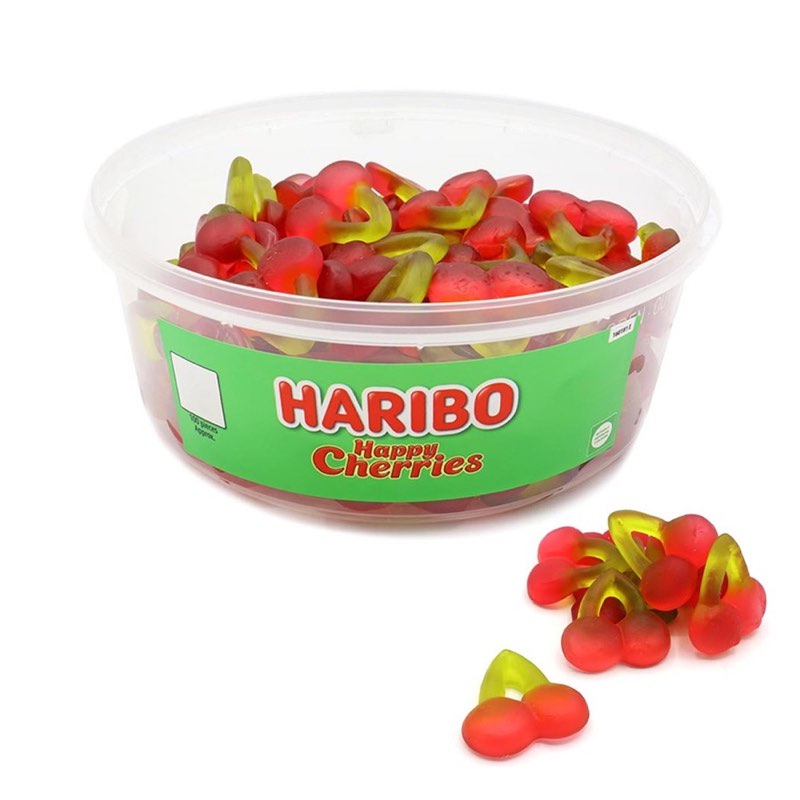
Haribo Happy Cherries Tub 780g
£8.99
✔ In stock — ready to ship
Fresh stock
Free over £20
Same-day dispatch
Secure checkout
Start with the object rather than the label. What you are buying here is 780g of cherry sweets in a tub, for £8.99, and the important word in that sentence is tub. Not a bag, not a share pack, not a multipack of individually wrapped portions. A tub is a container you put down on a surface and leave there, and everything about how this product behaves in a house follows from that. It is a stocking decision, not a snacking decision. You are not buying enough sweets for tonight; you are buying enough sweets that the question of sweets does not come up again for a while.
That format has a long and specifically British history, and it is worth understanding, because it explains why the big plastic tub has outlived almost every other way of selling sweets in bulk. The ancestor of this tub is the glass jar on the shelf behind a counter. For most of the twentieth century, that was simply how sweets were sold in this country — not in packaging, but in a jar, with the shopkeeper as the interface. You pointed. Somebody unscrewed a lid, tipped a scoop, weighed it, and poured it into a paper bag. The unit of sale was weight, which is why we still talk about a quarter and why so many of our own listings are still priced against a gram figure rather than a pack.
The full guide to Haribo Happy Cherries Tub 780g
6,387 words on how it eats, who it suits, how to serve it and what to put beside it.
Sold by the scoop: where a 780g tub of cherries sits in British sweet-shop culture
The economics of that shop were completely unlike the economics of a modern confectionery aisle, and they shaped what the sweets themselves looked like. Because nothing was packaged, nothing had to earn back the cost of its packaging, and a line could survive on modest sales for decades. Because the sale was by weight, one jar served both the child with a handful of coins and the adult buying for a party — no need for two products. And because the sweets sat naked behind glass, they had to sell themselves entirely on appearance from four or five feet away. No logo, no front-of-pack, no claim. Just a shape and a colour, doing all the work.
Look at the survivors of that era and the pattern is obvious. The shapes are literal and immediately readable: bottles, babies, fish, fried eggs, teeth, cola bottles, cherries. They are not abstract. A child scanning a wall of forty jars needs to identify the contents of each one in about two seconds, and the fastest way to communicate "this tastes of cherry" through glass is to make the sweet look like a cherry. That naming-by-shape convention is one of the deepest habits in British confectionery, and it is why a product can be called Happy Cherries and require no further explanation. The name is the description.
The other half of the tradition is the seaside shop, and it did something the corner shop did not: it sold in serious quantity. Holiday buying works differently. You are not buying a quarter to eat on the walk home from school — you are buying something to take back to the caravan, hand round on the beach, or carry home to people who did not come with you. The seaside shop is where the half-kilo and the kilo became normal, where the giant novelty format became a legitimate product category, and where "how much of this can I have" stopped being an embarrassing question. Every bulk tub sold in Britain today, including this one, is a descendant of that holiday logic.
What the tub added to the jar was portability and a lid. The jar was a shop fixture; you never took one home. The tub takes the whole apparatus — the volume, the visible contents, the scoop-into-a-bag ritual — and puts it in your kitchen. You become the shopkeeper. Somebody in your house wants sweets, and they go to the tub, and they take some, and the lid goes back on. It sounds trivial, but it changes the psychology completely. A bag of sweets is finished; a tub is depleted. Nobody eats a tub in an evening the way they might finish a share bag, because the quantity itself is a brake.
This is also where our own loose sweets shelf comes from, and at three hundred and fifty-six lines it is still by a distance the largest part of this shop. Scroll it and you will see the inheritance running straight through: the bulk formats, the shape-names, the flavour-led naming, the complete absence of anything that needs a paragraph to explain itself. A very large proportion of what sells in Britain is still, structurally, jar confectionery — it has simply moved from glass behind a counter into plastic on your worktop.
Cherry occupies a particular seat in that tradition. It is not one of the founding flavours in the way lemon and peppermint are — those came out of a much older pharmacy-and-lozenge world. Cherry arrived with the fruit-gum era and it has been a fixture ever since, largely because it does something no other red flavour quite manages. Strawberry is soft and floral and reads as childish; raspberry is sharper but narrower; cherry has a slight bitter edge underneath the sweetness that keeps it interesting to adults. It is the red flavour that grown-ups will admit to liking. Our cherry shelf runs to twenty-one lines, which is small against the hundred and sixty-one on the broader fruit flavour shelf — but cherry lines tend to be long-lived rather than numerous. They do not come and go.
The last thing the counter tradition gave us is a way of choosing that has almost nothing to do with brand. In a sweet shop you chose by flavour and by shape, and only afterwards found out who made it. That is still how most people buy sweets, whatever the marketing departments would prefer, and it is why the shelves on this site are cut by flavour and format first. If you came here because you wanted cherry, the brand is a detail. If you came here because you wanted this maker specifically, the Haribo range runs to forty-three lines and you can work through it on its own terms.
The tub itself, and what the first lid-off tells you
A 780g tub is a genuinely substantial object. It has weight in the hand — most of a kilo once you count the container — and it takes up shelf space in a way a bag does not. That is not a complaint; it is the point. This is a container designed to be seen. It goes on a counter, in the middle of a table, on a shelf in a common room, and its job is to be noticed and returned to.
The lid is the underrated part. Anyone who has kept sweets in a bag folded over twice, or in a bag with a resealable strip that stopped sealing on day three, knows the difference a proper screw or snap lid makes. It is what turns a quantity of sweets into a store of sweets. You can take six out and put it back and it will be in the same condition in a fortnight. The bag equivalent of this product would be a slow disaster; the tub equivalent simply sits there.
On first opening, the thing you register is volume rather than detail. There is a lot in there. The individual sweets are what they say on the label — cherries, in the shape-naming tradition described above — and the flavour reading is the one the name promises. What you do not get, and should not expect, is variety: this is a single-flavour tub, and that is a deliberate choice with real consequences for who it suits. A mixed tub gives you novelty and the small game of picking favourites. A single-flavour tub gives you reliability. You always know what the next one will be.
People underestimate how much that matters. In a mixed bag there is always a flavour somebody in the house does not want, and it sits at the bottom accumulating until somebody eats it out of duty. A cherry tub has no bottom-of-the-bag problem. Everything in it is the thing you bought it for, so the last handful is exactly as good as the first — which, over 780g, is a meaningful advantage.
How the cherry reads, from first bite to aftertaste
Cherry as a confectionery flavour has a distinctive three-part shape, and once you notice it you cannot stop noticing it. The opening is bright and immediately red — a clear, forward hit that arrives before you have finished the first chew. It is one of the fastest-reading flavours in sweets, much quicker off the mark than apple or pear, and slightly quicker than strawberry.
The middle is where cherry earns its reputation. Underneath the brightness there is a rounder, deeper, faintly stone-fruit note — the part that people describe as almondy or marzipan-ish even when nothing of the sort is involved. It is a property of how cherry flavour is built, and it is the reason cherry does not get boring the way some single-note fruit flavours do. Where a plain strawberry sweet gives you one thing loudly, cherry gives you two things in sequence, and the second one is the more grown-up of the pair.
The finish is clean and reasonably short. Cherry does not coat the mouth the way toffee or a heavy cream flavour does, and it does not leave the acid edge that a sour line leaves on the sides of your tongue. It fades out within a few seconds of swallowing, and — this is important for a 780g tub — it leaves the palate ready for another one. Flavours that linger heavily are self-limiting. Cherry is not, which is precisely why the tub format suits it and why the lid matters.
Eating from a tub also changes the pacing in a way worth planning for. From a bag, you hold the bag, and the bag's emptiness tells you when to stop. From a tub, you take a handful, put the lid back, and eat the handful. That extra step is a built-in pause. If you want to slow a tub down, do not eat from it directly — decant a portion into a small bowl and put the tub away. The physical act of getting up to refill is worth more than any amount of resolve.
A note on serving temperature, because it genuinely changes the experience with any chewy sweet. Cold sweets are firmer and release flavour more slowly; room-temperature sweets are softer and more immediate. If the tub has been in a cold room, give a handful ten minutes on a plate before a tasting-led occasion. If you want the eating to last longer — a long film, a car journey — cold is your friend.
The collector's view: why a specific tub is worth noticing while it is here
There is a way of looking at a sweet shop that has nothing to do with hunger, and anyone who has ever hunted down a discontinued flavour knows it well. Call it the collector's view. In this frame, a product is not just a thing to eat — it is an edition. It exists in a particular size, in a particular format, at a particular moment, and all three of those can change or vanish without warning.
Confectionery is unusually prone to this. The category runs on novelty. Seasonal shapes appear for six weeks and disappear; limited runs come and go on the strength of one good summer; a format gets rationalised because the line that fills the tub is needed elsewhere. Very little of it is announced. Sweets do not get a farewell tour. One day the listing simply is not there any more, and the people who liked it spend years describing it to each other in forums.
Size is the most volatile variable of all, and it is the one collectors watch hardest. A line that exists in a big tub today may exist only in a small bag next year, and the difference is not merely quantitative — it is a different product experience, priced differently, bought by different people for different reasons. The 780g tub is a household format. The same sweets in a 100g bag are a handbag format. They are the same confectionery and almost completely different purchases. If the bulk format is what you actually want, it is worth treating its availability as a real thing rather than a permanent fixture.
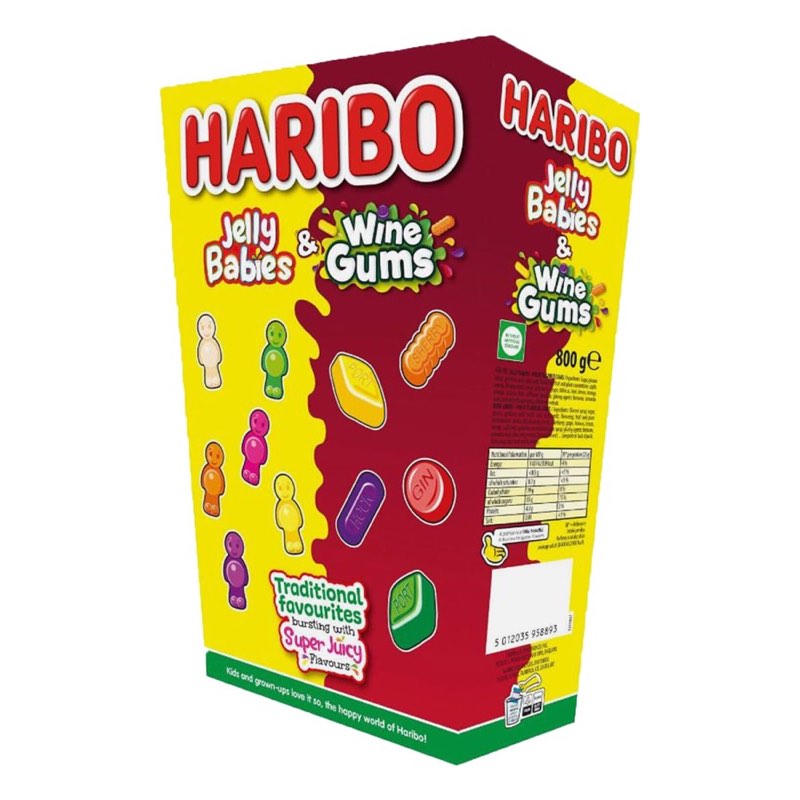
The second thing collectors watch is format itself — not size but kind. Sweets are sold in tubs, jars, cartons, gift boxes, theatre boxes, tubes, trays, buckets and pouches, and each of those is a distinct proposition even when the contents overlap. A gift box exists to be handed over; a tub exists to be raided; a tray exists to be looked at. The Megastars gift box at 800g for £6.99 and this tub are both large-format Haribo, and they do entirely different jobs: one is designed to be given, the other to be kept. The same is true of the jelly babies and wine gum gift box, also 800g at £6.99, which pairs two classics in a presentation format rather than committing to one.
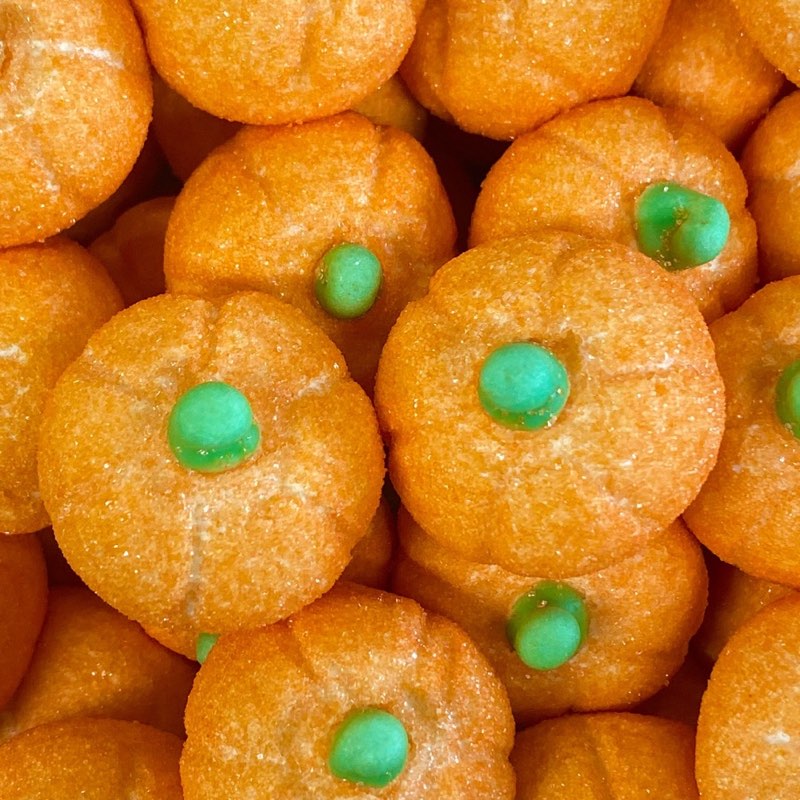
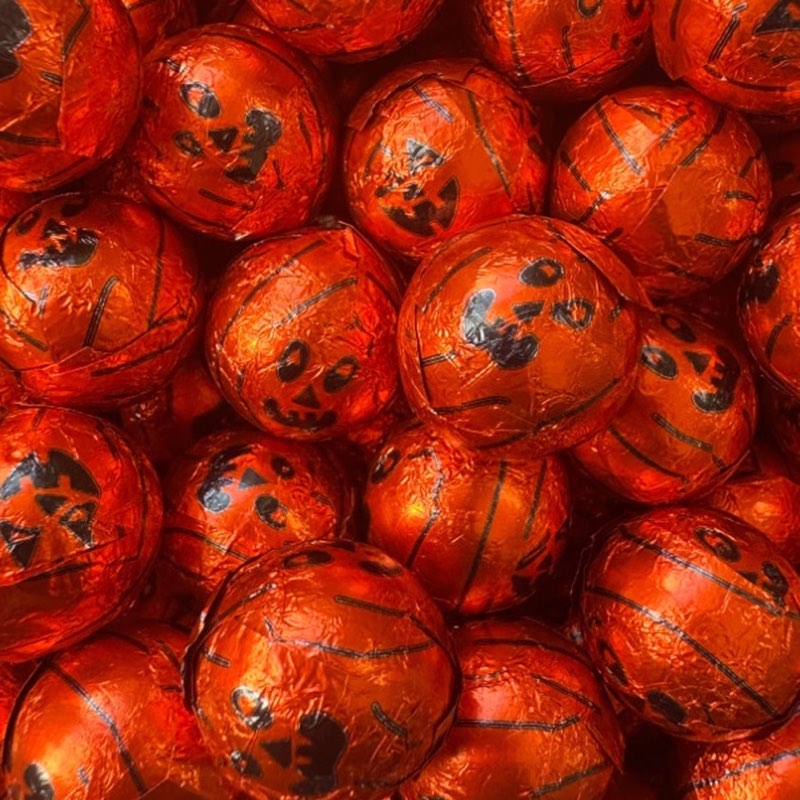
Novelty formats are the third collectible strand, and they are the most fun to follow because they are the least predictable. Some of them are essentially toys that happen to be edible. The Halloween pumpkin light pop at £1.49 is a pure seasonal-novelty object — 11g of sweet attached to a piece of theatre, on sale for a few weeks a year. The mini candy sushi tray at £2.99 is a format joke executed properly: a 100g tray that presents sweets as something else entirely. And the Bean Boozled box at £2.99 turns eating into a game with rules. None of these are things you stock a house with. All of them are things you buy because they exist right now.
What the collector's view teaches the ordinary shopper is a practical lesson about buying patterns. If you have found a flavour and format combination that genuinely works for your household — and a single-flavour bulk tub is a very specific combination — the sensible move is to treat it as your standing order rather than something to rediscover each time. Bulk formats reward loyalty. They are cheaper per gram than the small packs, they last, and they remove a recurring decision from your week.
The flip side is equally worth saying: bulk is a bad way to experiment. Nobody should discover whether they like a flavour by buying 780g of it. The correct way to explore is small, cheap and frequent — which is what the little formats are for. A 130g pack of soft and chewy fruity mini tubes at £1.49 or a bag of mini mochis in berry flavours at £1.35 costs less than a coffee and answers the question properly. Try small, then commit big. That is the whole method.
Seasonal shapes deserve a final word, because they are the part of the collector's view most people participate in without realising. Almost everyone has a sweet they associate with a specific time of year, and almost none of those associations come from the flavour — they come from the shape and the packaging. That is a manufactured effect, and it works anyway. A cherry tub sits outside the seasonal calendar entirely, which is its own kind of advantage: nothing about it says December or October, so it never looks out of place.
Cherry, and the red flavours it competes with
If you are building a spread or a mix, it helps to know how cherry behaves next to its neighbours, because the red end of the flavour wheel is crowded and the differences are real.
Against strawberry, cherry is the darker and more serious of the two. Strawberry is bright, soft-edged and slightly perfumed; it reads young. Cherry has that stone-fruit depth underneath and a faint bitterness at the back that strawberry never has. In a mixed bowl they do not clash, but they do not add much to each other either — they occupy adjacent seats and blur together.
Against raspberry, cherry is rounder and less sharp. Raspberry in confectionery tends to be built as a bright, almost tart note, and it is frequently paired with something to cut through — which is why raspberry so often turns up alongside liquorice or in sour formats. Cherry does not need cutting. It is balanced on its own.
Against sour cherry, the gap is enormous, and this is the most useful pairing to understand. A sour treatment does not intensify cherry so much as replace its front end with acid. The Mega Sour cherry bag at 104g for £3.99 is the same nominal flavour at the opposite end of the scale — a short, intense, deliberately punishing format against a long, mild, endlessly repeatable one. Put a few of those in a bowl beside a tub of these and you have a proper contrast rather than two versions of the same idea. It is one of the best two-item combinations in the shop.
Cherry also happens to be one of the flavours that survives translation into completely different formats, which is why you find it across the catalogue. The cherry fish from Kingsway at £5.49 put the same flavour into the fish shape-name tradition, and the fact that the cherry idea works equally well in a tub and in a shaped loose line tells you something about how robust the flavour is. There is a broader Kingsway selection worth a scroll if that style appeals.
The final comparison is with the mixed-fruit approach, where cherry is one voice among several rather than the whole choir. A mixed bag is a different kind of pleasure — variety, anticipation, the small negotiation over who gets which. Barratt's fruit salad chews at £5.49 are the classic combination-flavour answer, and the tutti frutti tubes tub at exactly the same 780g for £7.99 is the direct like-for-like alternative if you would rather have several fruit flavours than one. Those two tubs are the clearest decision on the whole shelf: same size, one flavour or many, a pound apart.
Who a tub this size is actually for
The honest answer is: households, not individuals. 780g is too much for one person to get through at a sensible pace unless sweets are a daily habit, and a tub that sits open for three months is not doing anyone any favours. It is bought properly by people who are feeding a group, regularly or occasionally.
Families with more than one child are the obvious case, and the single-flavour aspect is the reason. Mixed bags create disputes — somebody always wants the red ones. A tub where every sweet is identical removes the entire argument. Portioning becomes counting, and counting is fair in a way that picking never is.
Staff rooms, offices, workshops and common rooms are the second case, and the tub format is essentially designed for them. It sits somewhere communal, everyone takes a few, and the lid keeps it decent between raids. The economics work here too: at this size the per-person cost of keeping a bowl topped up for a month is trivial compared with buying packets.
Party and event buyers are the third, and for them the calculation is purely volume-based. If you are filling cones, jars, favour bags or a table, you need weight, and you need it at a sensible price per gram. A single-flavour bulk tub is a component in that build rather than the whole answer — which is exactly how it should be used.
Finally, there are the committed cherry people, and they are a real constituency. If cherry is your flavour, every mixed bag you have ever bought has been a compromise, because you were paying for four flavours to get one. A single-flavour tub is the first product that gives such a person what they actually wanted, and for them the 780g is not a lot — it is a relief.
Building a bowl, a mix or a table around it
A single-flavour bulk tub is at its best as a foundation rather than as the whole offer. Here is how to build properly around it.
Start with the base layer — the reliable volume that people eat without thinking. That is what this tub is for. On top of it you want contrast in three directions: texture, intensity and shape. Get all three and a bowl reads as generous and considered. Miss them and it reads as a lot of one thing.
For intensity contrast, sour is the obvious lever, and the cleanest version is the Tangfastics tub at 1kg for £11.99 from the same maker. It is a full kilo, so it is a serious commitment, but a bowl with a mild fruit base and a sour element is the single most reliable crowd-pleasing combination there is — everyone finds their level.
For shape and format contrast, bottles do a job nothing else does. The giant cola bottles at £5.49 bring both a different silhouette and a completely different flavour family, and cola next to cherry is a long-established pairing for good reason: one is fruit, the other is not-quite-fruit, and they do not compete.
For texture contrast, look at foam. The banana and caramel foam sweets at £7.50 are about as far from a firm fruit sweet as you can travel while still being in the same bowl — light, soft, and with a flavour pairing that has nothing to do with red fruit at all. A handful of foam in a bowl otherwise full of chewy things changes the whole feel of it.
For a genuine mixed approach, our pick and mix section exists precisely so you can assemble without buying five bulk formats. Use the tub for the volume, then use pick and mix for the variety on top — it is far cheaper than the alternative and you get to choose every element.
If you want to go broader still, the Supermix tub at 1kg for £11.99 is the maximal-variety answer in the same bulk format, and the Starmix tub at £4.99 is the lowest-cost way into a mixed tub at all. Between those two and this one you can cover almost any group's preferences without going near a small bag.
One rule that is worth following religiously when building: decide what the bowl is for before you fill it. A bowl for children who will graze all afternoon wants mild, repeatable and not sticky. A bowl for adults at the end of an evening can take sour, intense and odd. A bowl on a buffet table needs to look good more than it needs to be eaten. These are three different bowls, and the same contents will succeed in one and fail in the others.
Parties, film nights, hampers and the long car journey
Different occasions want different things from a bulk tub, and it is worth thinking through the main ones.
For children's parties, single-flavour bulk is a gift. You can fill cones and favour bags by the handful without anyone auditing the distribution, and because every sweet is the same, nobody's bag is better than anybody else's. If you are doing favour bags, portion them the day before — it is a twenty-minute job that becomes a nightmare if you leave it until people are arriving. Supervise young children with whole sweets, as you would with any confectionery.
For film nights, the mild-and-repeatable quality is exactly what you want. Something with a long, clean finish and no acid edge can be eaten steadily for two hours without wearing your mouth out — which is more than can be said for the sour end of the shelf. Decant into a bowl before you start and put the tub back in the cupboard, or you will finish the film and discover you have finished rather more than the film.
For hampers and gifting, a bulk tub works differently. It is not an elegant present on its own — it is too utilitarian — but it is an excellent anchor for a homemade hamper, with smaller and prettier things arranged around it. If the gift itself is the point, the purpose-built presentation formats do the job better: a gift box is designed to be handed over, and looks it.
For a car journey, the tub stays at home and a portion travels. Decant into a small sealed container, take a modest amount rather than the lot, and you avoid both the mess and the inevitable regret. One tub can service a dozen journeys this way.
For a seasonal table — Christmas, Easter, Halloween, a birthday spread — a big single-flavour bowl is the workhorse that lets the novelty items shine. Put the interesting, seasonal, photographable things in small dishes at the front and the volume at the back. People take the novelties first and eat the volume all evening.
And for the simplest occasion of all — a household that just wants sweets in the house — the tub is the answer to a recurring question. Buy once, put it on the shelf, stop thinking about it.
What 780g actually costs you, portion by portion
At £8.99 for 780g, this works out at a little under £1.16 per 100g. That is the number to carry around, because it is the only fair way to compare sweets across wildly different pack sizes.
Here is how that sits against other bulk and small formats we stock:
| Product | Price | Weight | Roughly per 100g |
|---|---|---|---|
| Happy Cherries tub | £8.99 | 780g | £1.16 |
| Candy Realms Tutti Frutti Tubes tub | £7.99 | 780g | £1.02 |
| Haribo Supermix tub | £11.99 | 1kg | £1.20 |
| Haribo Tangfastics tub | £11.99 | 1kg | £1.20 |
| Megastars gift box | £6.99 | 800g | £0.87 |
| Mega Sour cherry bag | £3.99 | 104g | £3.84 |
The bottom row is the one that makes the case. A small bag of a speciality line costs more than three times as much per gram as a bulk tub. That is not a criticism of the small bag — you buy it for the intensity and the novelty, not for the value — but it does show you what bulk buying is actually for. If your household eats sweets regularly, the bulk formats are where the money is saved, and the small formats are where the variety comes from.
In portion terms, 780g gives you roughly twenty-six 30g portions, or around fifteen generous 50g handfuls. For a family of four having something on a Friday evening, that is a couple of months. For an office bowl topped up weekly, it is around six to eight fills. For a children's party of twenty with a small cone each, it is most of the way to done on its own.
The value question people get wrong is the one about waste. The cheapest sweets per gram are worthless if half of them are a flavour nobody in the house likes. A single-flavour tub has an effective waste rate of zero, assuming you bought the right flavour — every gram gets eaten. Compared against a mixed bag where one flavour reliably gets left behind, the real-world cost per eaten gram can easily come out in the tub's favour even when the headline price does not.
There is also the recurring-purchase argument. Buying a small pack every week for two months costs considerably more than one tub, and involves eight separate trips or orders. Bulk buying is partly about money and partly about removing a small repeated decision from your life.
Keeping 780g in good condition
The enemies of any sweet in storage are heat, damp and air, in that order, and the tub handles the third one for you as long as you use the lid properly.
Heat is the main one to watch. A tub left in direct sun on a windowsill, or on a shelf directly above a radiator or an oven, will soften and the contents will begin to stick to one another. Once sweets have fused into a mass they are still perfectly edible but they are no longer pleasant to serve, and no amount of chilling fully reverses it. Keep the tub in a cupboard, at normal room temperature, away from anything that generates heat.
Damp is the second. Do not store the tub anywhere steam collects — above a kettle, beside a hob, in a cupboard next to a tumble dryer vent. A sticky surface on sweets is almost always a humidity problem rather than an age problem.
Air is the third, and it is the one the format solves. Put the lid back on properly every single time. A tub left open overnight will start to dry at the surface, and with a big container that surface is a lot of sweets. The whole advantage of buying in this format is that you can take a handful in week one and week six and get the same thing both times, and that only holds if the lid is respected.
Two practical habits worth adopting with any bulk tub. First, never eat directly from it in company — hands in a communal container is how a tub gets thrown away half full. Decant. Second, if you find the tub is going slowly, split it: keep a small working jar out and the main tub sealed in a cupboard. You are opening the big container once a fortnight instead of ten times a day, and it will stay noticeably better for it.
Check the manufacturer's packaging on arrival for storage guidance and any information you need before eating, particularly if anyone in the household has an allergy. We do not restate packaging information on our listings — always read the pack itself.
Sizes, options and what "one size" means here
This listing is a single option: one size, 780g, £8.99. There is no smaller taster version of this exact line on the site, which makes the choice a straightforward yes or no rather than a comparison — you are either buying the bulk format or you are buying something else.
If 780g feels like more than you want to commit to, the sensible move is not to hunt for a smaller version of the same thing but to approach the flavour from a different direction first. A small sour cherry bag or a shaped cherry line will tell you whether cherry is the flavour your household reaches for, at a fraction of the outlay, and you can scale up afterwards.
If 780g feels like too little — and for a big event it genuinely might be — the kilo formats are the next step up in scale, though they are mixed rather than single-flavour. Two tubs of this is also a perfectly reasonable answer for a large party; it is less elegant than one big container but it means you can put a bowl in two rooms.
Stock on this line is currently available. Bulk formats move in a lumpier pattern than small packs — they sell in bursts around parties and school holidays — so if you are buying for a fixed date, buy with a few days' margin rather than on the morning.
Finding your way around the rest of the shop from here
This listing sits on four shelves, and each one leads somewhere different depending on what brought you here.
If you came for the flavour, everything we hold with a cherry profile is the right next click — twenty-one lines across formats, brands and intensities. If you want to widen that out, the full fruit-flavour listing at a hundred and sixty-one lines covers the whole spectrum from single-fruit to mixed.
If you came for the maker, the complete Haribo shelf holds forty-three lines in tubs, boxes and loose formats. If you came for the format, the loose and bulk section is where all the weight-based buying lives, and it is the shelf most worth browsing slowly.
Beyond those, the full catalogue is the place to start if you have no fixed idea yet and would rather browse than filter. The candy and chocolate shelf is where you go when the answer is not a fruit sweet at all, and building your own mix is the route for anyone who wants variety without committing to several bulk containers.
A shortcut for regular buyers: decide whether you are a shelf shopper or a product shopper. Shelf shoppers browse a category and pick what looks good that week. Product shoppers come back for the same three lines every time. Both are perfectly good ways to use the site, but the shelf shopper should bookmark a category page and the product shopper should bookmark the products themselves.
Questions people ask before buying a tub this size
How many sweets are in a 780g tub?
We do not publish a piece count, because the number varies with the size of the individual sweets and we would rather not give you a figure we cannot stand behind. What we can tell you is the weight, which is the number that matters for planning: 780g. For party portioning, work in grams rather than pieces — around 30g to 50g per person for a cone or favour bag, which puts a tub somewhere between fifteen and twenty-six servings depending on how generous you are.
Is this one flavour all the way through, or a mix?
It is a single-flavour tub — cherry throughout, within the broader fruit family. That is the main thing to understand before buying, and it is either exactly what you want or exactly what you do not. If you would rather have variety across the same quantity, the tutti frutti tub is the same 780g with multiple fruit flavours, and the Supermix and Starmix tubs go wider still.
What does it work out at per 100g?
A little under £1.16 per 100g, at £8.99 for 780g. That sits in the middle of our bulk formats and well below anything sold in a small bag — a 104g speciality bag runs closer to £3.84 per 100g. If value per gram is your main criterion, the bulk tubs are where to look, and the gift boxes at 800g for £6.99 are the cheapest large format we stock.
Will it stay fresh once it is open?
Yes, provided the lid goes back on each time and you keep it somewhere cool, dry and dark. That is the whole point of the format — a resealable container means the last handful is in the same condition as the first, which is not true of a folded-over bag. Avoid windowsills, radiators, and any cupboard that gets steam. Storage guidance on the manufacturer's packaging takes precedence over anything general we say here.
Is this suitable for a child's party?
It is a good fit for one, mostly because the single flavour removes the arguments that mixed bags create — no child gets a worse bag than another. Portion into cones or favour bags the day before rather than on the day. As with all confectionery, sweets are a treat, whole sweets are a choking risk for young children, and small children should be supervised while eating. Anyone with an allergy in the group should check the manufacturer's packaging before eating.
Can I buy a smaller size of this one to try first?
Not of this exact line — it is listed in one size only, at 780g. If you want to test the flavour before committing, buy a small cherry line instead: a 104g sour cherry bag or a loose cherry-flavoured shape will tell you whether cherry is what your household reaches for, for a few pounds rather than nine.
What goes well with it in a pick-and-mix bowl?
Contrast in three directions works best. Something sour, to give people a second gear — Tangfastics is the obvious partner. Something in a different shape and flavour family, like cola bottles. And something with a completely different texture, such as a foam sweet. A bowl with a mild fruit base plus those three elements covers most tastes in a room without becoming a jumble.
Is a tub better value than a gift box?
It depends what you are buying it for, not on the arithmetic. Per gram, the 800g gift boxes at £6.99 are cheaper than this tub. But a gift box is designed to be handed over once and opened once; a tub is designed to be kept, raided and resealed over weeks. If the sweets are a present, buy the box. If the sweets are household stock, buy the tub, and do not let the per-gram figure talk you into giving somebody a plastic tub for their birthday.
How long will a tub last a family?
For a family of four having something a couple of evenings a week at around 30g each, 780g is roughly six to eight weeks. For an office bowl on open access, expect considerably faster — communal bowls empty at a rate that has very little to do with how many people work there. If you want it to last, decant a working portion and keep the main tub in a cupboard.
Do you stock anything else with this exact flavour in a different format?
Cherry turns up right across the catalogue in different guises — as a sour bag, as a shaped loose line, and within mixed fruit assortments. The cherry shelf gathers all twenty-one of them in one place, which is the fastest way to see the range of intensities and formats side by side rather than hunting product by product.
Is the tub itself reusable?
Plenty of people keep them, and a sturdy lidded container is genuinely useful for storing loose sweets bought by weight, or for splitting a large bag into manageable amounts. Wash and dry it thoroughly first. If you buy from the loose shelf regularly, having two or three empty tubs in a cupboard makes the whole business of storing pick-and-mix considerably tidier.
What if I want variety but the same amount of sweets?
Two good routes. Either buy a mixed tub of the same scale — the 780g tutti frutti tub or the 1kg mixed formats — or build the variety yourself from the pick-and-mix section and keep the bulk tub as the base layer underneath it. The second route costs a little more attention and gives you exactly what you want, which is usually worth it.
The short version
This is 780g of one flavour in a lidded tub for £8.99, which is a shade under £1.16 per 100g. It is household stock rather than a treat purchase — the thing you buy so that the question of whether there are any sweets in the house has a permanent answer. The single flavour is the feature, not a limitation: nothing gets left at the bottom, nobody argues over the good ones, and the last handful is the same as the first.
Buy it if cherry is a flavour your house actually reaches for, and if you have the people to get through most of a kilo at a reasonable pace. Build around it rather than relying on it alone, keep the lid on, keep it out of the sun, and check the manufacturer's packaging when it arrives. It is a straightforward, unglamorous, genuinely useful thing to have on a shelf — which is precisely what the tub format was invented for.
More from Haribo
More fruit sweets


More loose sweets sweets
Where this sits
Haribo Happy Cherries Tub 780g appears on these shelves. Browse them, or jump to something nearby.
You might also like